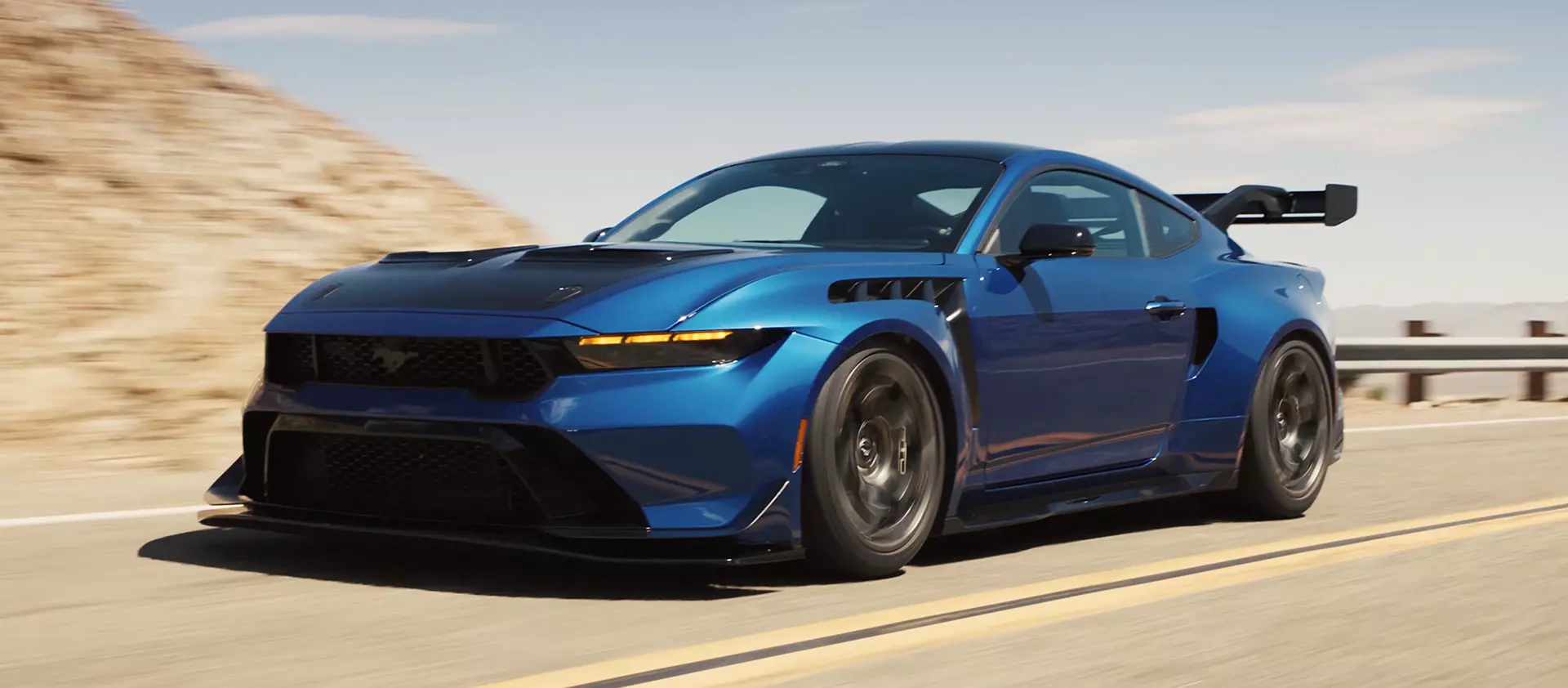
Independent Test Analysis — Ford
The Mustang GTD Ran 6:52.072. Asterisks Included.
815 hp. 6:52.072. $367,960 as-tested.
2025 Ford Mustang GTD · May 11, 2026 · Updated November 13, 2026 · The Torque Wrench · Independent Test Analysis
815 hp
5.2L supercharged V8
664 lb-ft
Peak torque
2.8 s
0–60 mph (Car and Driver, tested)
8-speed
DCT transaxle
6:52.072
Nürburgring · 2nd run, production Sports class
$367,960
Price · as-tested
Full disclosure: The Torque Wrench wasn’t in the passenger seat — this is the verified breakdown, not a road test. The 6:52.072 is Ford’s official time; the skepticism is ours.
So, the Ford Mustang GTD just dropped a 6:52.072 at the Nürburgring—and yeah, that’s insanely fast. Like, “there’s definitely something a bit fishy here…” fast.
But before we crown it king of the Green Hell, let’s talk about the fine print.
R02Chapter 01
Speed With a Side of “Optimized”
This wasn’t your average showroom-spec run. The setup was… let’s call it enthusiast plus-plus mode, and there was some weight saving in the name of “production intent.” What Ford hasn’t said is the lap car’s exact option spec — which is the honest asterisk, and the whole point of the asterisk report below.
01
The rubber
Michelin Pilot Sport Cup 2 Rs — DOT-approved road tires, but about as close to a slick as a road tire gets. A 6:52 on ordinary street tires is a fairy tale; on Cup 2 Rs it’s a Tuesday with enough budget.
02
The setup
Alignment, aero and damping in what we’ll call “enthusiast plus-plus” mode. Technically production. Spiritually, a race team.
03
The diet
Weight saving in the name of “production intent.” Every gram removed in the name of intent is a gram your dealer will put back.
The lap time is confirmed — Ford’s own 6:52.072, second run. The setup details above are our analysis, not Ford’s spec sheet.
Now, is that cheating? Not technically.
But it sure isn’t plug-and-play either.
20.832 km
One lap of the Nordschleife. The GTD covered it in 6:52.072 — asterisks and all.
American muscle. German lap time. Three asterisks.
— The Torque Wrench
R03The verdict
The Bottom Line
The Mustang GTD is stupid fast. Full stop.
Is it a fair comparison to other Nürburgring times? Debatable.
But does it prove that American muscle has evolved into a legitimate track weapon? Absolutely.
Just… maybe take that 6:52.072 with a grain of salt. And some sticky rubber. And maybe an asterisk or two.
Strip away the lap-time argument and what is left is still extraordinary: a Mustang with a dry-sump V8, a transaxle, pushrod suspension, and active aero, built by the people who build Ford’s GT3 cars. Nothing else with a blue oval on it has ever been this serious.
But the number on the windscreen is not the number on the stopwatch. The GTD’s rivals went quicker for less money, and the asterisks on the 6:52.072 — the options, the setup, the second attempt — are now part of the car’s story whether Ford likes it or not.
Buy it because it is the maddest Mustang ever built. Do not buy it because it owns the ’Ring. It did, briefly. It does not any more.
What we love
- Blistering 6:52.072 Nürburgring lap time
- Proves American muscle can compete globally
- Supercharged V8 with serious power
- Track-focused aerodynamics and chassis
- A Mustang that can corner properly
What could be better
- Lap time comes with a price asterisk, not a spec one
- As-tested car wore the $40,000 Performance Package
- Cup 2 Rs: road-legal, not everyday tires
- Expensive for a Mustang
Technical specifications
- Engine
- 5.2L Supercharged V8
- Power
- 815 hp
- Torque
- 664 lb-ft
- Transmission
- 8-Speed DCT transaxle
- 0–60 mph
- 2.8 seconds (Car and Driver, tested)
- Nürburgring
- 6:52.072 (2nd run, production Sports class)
- Price
- $367,960 as-tested · $327,960 Monroney
R04Chapter 02
Still Impressive as Hell
Let’s be real: a production-based Mustang going sub-7 minutes is bonkers, no matter how many asterisks you slap on it.
It’s a car with a body-in-white from Flat Rock Assembly in Michigan, hand-finished by Multimatic in Markham, Ontario, competing with machines engineered in Stuttgart and Maranello.
That alone deserves respect.
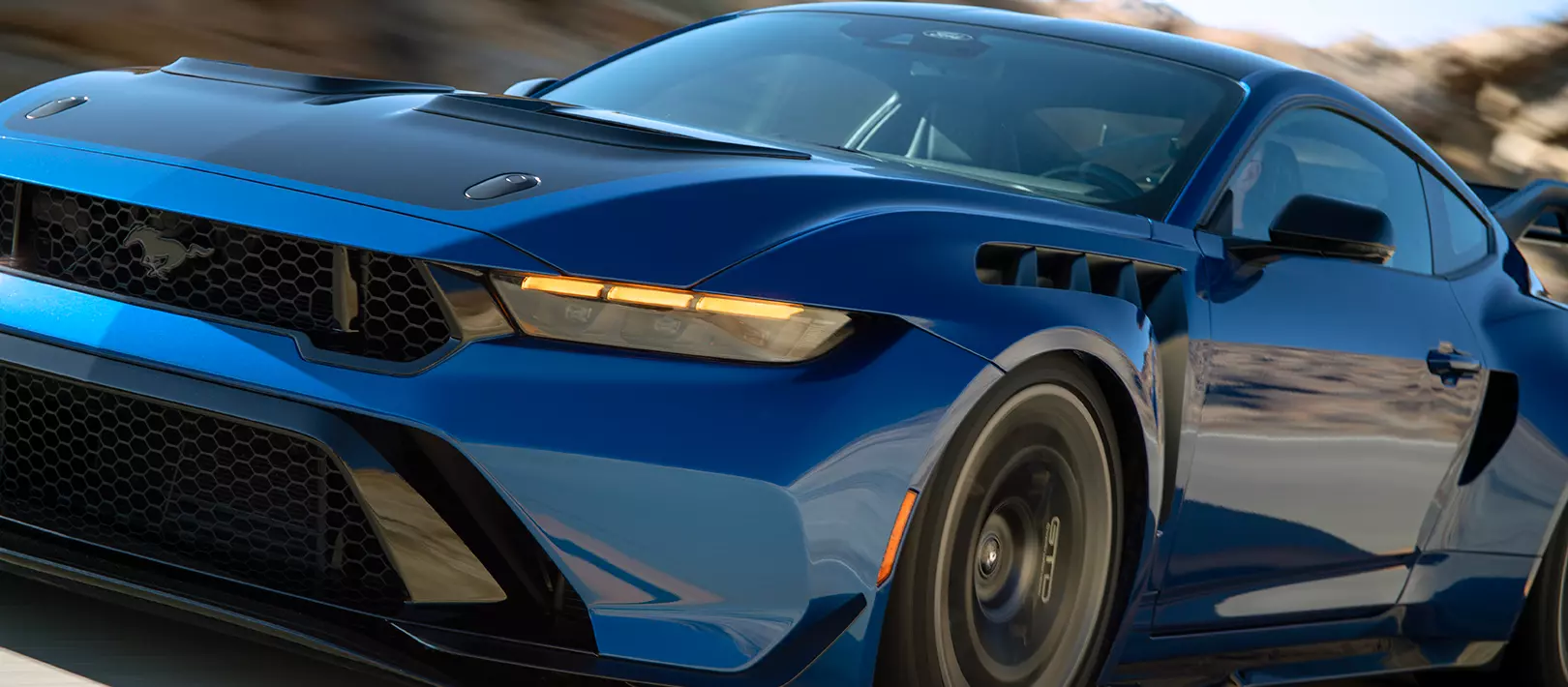
“A production-based Mustang going sub-7 minutes is bonkers, no matter how many asterisks you slap on it.”
R05Chapter 03
But… Is It Fair?
Here’s the thing: lap records used to mean something. Now? Everyone’s playing fast and loose with “production spec” — Cup 2 Rs here, a removable roll cage there, carbon everything somewhere else.
The GTD’s case is cleaner than that sounds. The Cup 2 Rs are DOT-approved road tires, and the second-run changes — stiffer chassis, new Multimatic dampers, reworked aero — went into every production car. By Torque Authority’s own leaderboard rules, the lap counts.
The honest asterisk is the price tag, not the rulebook. Car and Driver’s test car wore the $40,000 Performance Package and priced at $367,960 as tested, and Ford’s lap announcement doesn’t state the Ring car’s option spec. So the only honest price to quote next to the lap time is the as-tested one — not the $327,960 base.
So the lap stands. What doesn’t stand is the value case: the Corvettes are faster and cheaper, and the GTD is the slowest of the three and the most expensive to buy new.
R06Chapter 04
The Hardware Behind the Number
Start with the engine, because Ford did. The 5.2-liter Predator V8 is GT500 stock with a revised intake, smaller supercharger pulley, titanium Akrapovič exhaust, and — a first for any Mustang — a dry-sump oil system. 815 hp at 7,400 rpm, 664 lb-ft, revving to 7,650 rpm.
The chassis is where the GT3 blood shows. Multimatic ripped out the Mustang’s rear end and fitted inboard pushrod suspension with DSSV dampers, a carbon-fiber driveshaft, and a rear Tremec 8-speed dual-clutch transaxle for near 50/50 weight distribution. Hit Track Mode and a second spring locks out, dropping the car 40 mm at the front and 30 mm at the rear.
Then the air. A C-pillar-mounted wing, active front flaps, and a hydraulic drag reduction system that trims drag on the straights and slams the downforce back on for corners: 885 kg at 180 mph, GT3 RS territory, pressing 325-front and 345-rear Cup 2 Rs into the tarmac, with carbon-ceramic Brembos behind them.
So where did the second lap find 5.6 seconds? (Ford rounds it to 5.5.) A stiffer chassis, new Multimatic dampers, reworked alignment and aero, recalibrated powertrain, ABS, and traction control. The gains came on the straights and the fast stuff. The bill comes in the slow corners: 4,386 lbs is still 4,386 lbs.
R07Chapter 05
The Build Sheet (Bring a Calculator)
The headline price is $325,000. The Monroney says $327,960: a $318,760 base MSRP plus $5,500 destination and a $3,700 gas-guzzler tax. Freight and tax alone add $9,200 to the base MSRP — the $2,960 gap is just the difference between the quoted base price and the Monroney total.
The option that matters is the $40,000 Performance Package: active aero and magnesium wheels. Car and Driver’s test car had it, priced at $367,960 as tested — and the package was developed for the record attempt, per Ford CEO Jim Farley — though Ford hasn’t published the lap car’s option spec. Worth remembering next time someone quotes the base price and the lap time in the same breath.
Want it prettier? The Carbon Series runs about $428,000 for unpainted carbon on the hood, roof, and decklid. The Spirit of America is about $429,000, Performance Package included. The Liquid Carbon — the whole body in clear-coated bare carbon — is estimated near $450,000. Tick every box and one buyer told The Smoking Tire his build passed $600,000.
R08Chapter 06
The Neighbors Are Faster
Here is the uncomfortable part. The GTD is no longer the fastest American at the ’Ring. Chevrolet turned up about three months later with engineers, not racing drivers, and beat it twice: the ZR1X in 6:49.275 with 1,250 hybrid horsepower, the plain ZR1 in 6:50.763 with 1,064 hp — though both Corvettes ran in the Nürburgring’s Prototype/Pre-Production class, not the production Sports class, because they aren’t sold in Europe. Both cost less — the ZR1 from $197,495, the ZR1X from $227,695.
Then the old benchmark. The Mercedes-AMG GT Black Series did 6:48.047 back in 2020 with 720 hp and a $325,000 launch price — the same money as a base GTD, four seconds quicker, on the same full 20.832 km layout. Out of production; recent Bring a Trailer sales cluster $430,000–$490,000, so $440,000 sits at the low end of the market. The lap time does not care.
So what is the GTD’s case? It is the only one of the three American contenders with a supercharged V8 and a race-bred chassis you can still order from a Ford dealer — if Ford picks you. It is also the slowest of the three American contenders and the most expensive to buy new. Detroit built a giant-killer. Then the giants moved.
R09Chapter 07
Update: Ford Went Quicker (April 2026)
Ford went back. On March 24, 2026, the GTD Competition — a limited, serialized, street-legal special edition — ran 6:40.835 at the Ring with Dirk Müller, 11.237 seconds under this car’s 6:52.072 and 8.44 seconds under the Corvette ZR1X. It is the fastest American road-legal lap at the Nürburgring.
The asterisk matters. The Competition ran in the Nürburgring’s Pre-Production / Prototype class, not the production Sports class this car sits in. Ford will not say what it makes (beyond 815 hp) or what it costs. So the 6:52.072 on this page stands as the production GTD’s time — the Competition is a different car on a different list. The full duel, stopwatch and argument both, is in our America at the Ring head-to-head.