Issue Nº 02 — Autumn 2026
R01Preview — Ferrari
Ferrari Brought Back the Manual. The Gearbox Didn't Come With It.
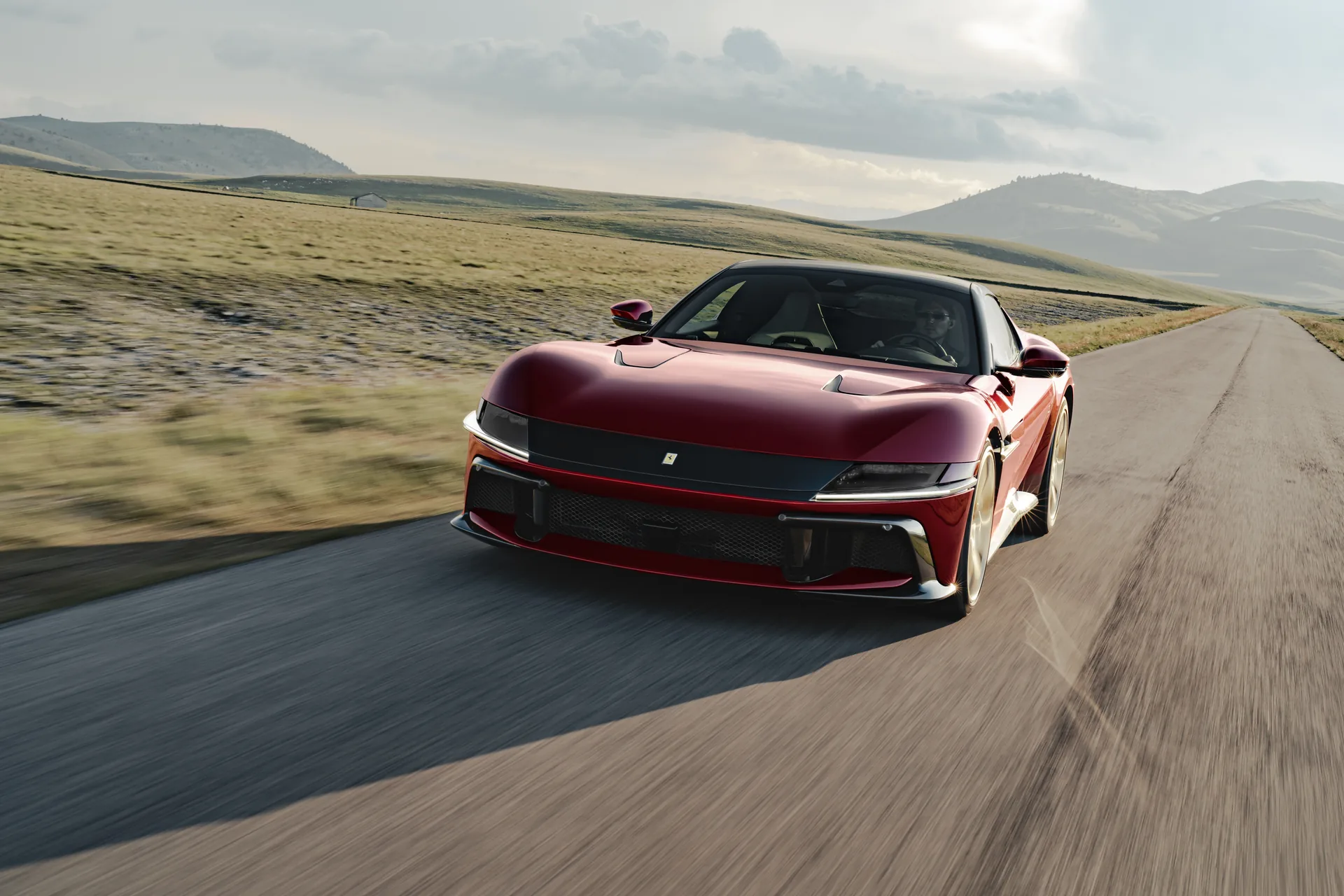
2027 Ferrari 12Cilindri Manuale · November 9, 2026 · Updated November 11, 2026 · Preview
Preview, no score. The gated shifter is real and the clutch pedal is real — the gearbox underneath is the standard car's eight-speed dual-clutch, driven by wire. 819 hp, 1,499 coupés, from about €590,000, deliveries from early 2027.
Gears — manual mode vs automatic mode
6
forward gears
Gated manual, by wire
over
8
gears
Dual-clutch underneath
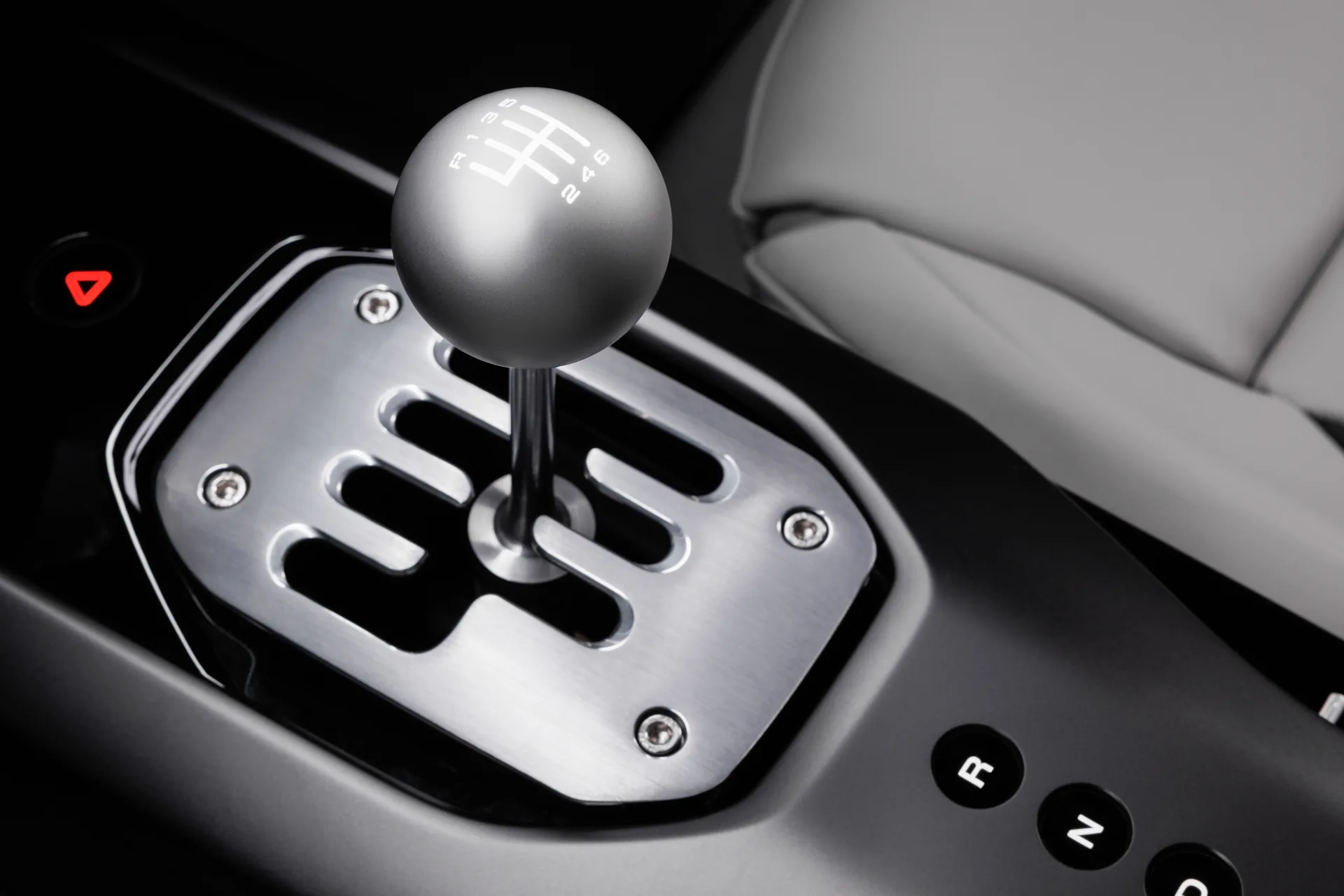
Manuale By-Wire keeps the standard 12Cilindri's eight-speed dual-clutch transaxle and adds a gated six-speed shifter and a clutch pedal on top of it. The lever moves nothing mechanical — sensors tell the gearbox what to do.
819hp
6.5L NA V12
9,500rpm
Redline
2.9s
0–100 km/h, manufacturer
1,499
Coupés, effectively sold out
€590,000
From, Italy — reported
70km/h
Engage manual below this
Full disclosure: The Torque Wrench hasn't driven it — and neither have you, unless you are one of the 1,499. The 12Cilindri Manuale was revealed at Maranello on July 3, 2026, and first driven by journalists at Balocco and Fiorano in October. This is the verified breakdown, not a road test — every claim below is traced to Ferrari or to a first drive, and the places where the first drives disagree are flagged, not smoothed over.
Here is the sentence Ferrari does not want on the poster: there is no manual gearbox in this car. Underneath the polished steel gate sits the exact same eight-speed dual-clutch transaxle as the standard 12Cilindri, doing the exact same job it always did. What Ferrari built instead is an interface — a clutch pedal, a gated lever, and a small army of sensors, solenoids, and software that translate your left foot into instructions for a gearbox that never needed you. It is the most honest dishonesty in the car business: a manual that is not a manual, sold to people who know exactly what it is, for €190,000 more than the car without it.
And here is the sentence that ruins the punchline: by every account from Balocco and Fiorano, it works. Jason Cammisa's verdict at Hagerty was a resounding yes. Auto Express called it not totally convincing, but superb anyway. The people who drove it stalled it, tricked it, spun it, and came back grinning. Ferrari spent the better part of two decades burying the manual transmission. It turns out the burial was premature — and the resurrection is weirder, cleverer, and more expensive than anyone guessed.
R03Chapter 01
The Trick, Explained Honestly
Start with what Ferrari actually built, because the name does half the lying for it. Manuale By-Wire keeps the standard 12Cilindri's eight-speed dual-clutch transaxle and adds a gated six-speed shifter and a clutch pedal on top of it. The lever moves nothing mechanical. Sensors read your hand and your left foot, and the gearbox's control unit does the shifting — a system Ferrari developed in-house at Maranello, led by Valentin Marguet, over several years and, by its own account, at great expense.
The hardware is not a costume. The gate is polished steel with anodised aluminium, the knob is a round aluminium ball, and the pedals are drilled aluminium. The clutch works against a pre-loaded spring, a cam and a roller. A rotating block of solid-machined high-strength steel gives the lever its heft, eccentric rollers guide it back to neutral, and carefully engineered acoustics recreate the metallic snick of the old open gates. Around 80 per cent of the control logic had to be rewritten to cope with the unpredictability of human inputs. That is not a garnish. That is a second car hiding inside the first one.
Driving it works like this. In its default mode the Manuale is an automatic, all eight gears available, paddles deleted — there are none anywhere on the wheel. Dip the clutch below 70 km/h, select one of six gears plus reverse, release, and you are in manual. You can blip the throttle, heel-and-toe a downshift, or misjudge the clutch and stall the engine outright. The system protects against damaging over-revs and little else. Ferrari benchmarked its own old manuals for the shift feel, which — as Cammisa dryly notes — were never that good to begin with: light flywheels, long throws, revs falling to idle the moment you declutched. The Manuale has no flywheel at all, so there is nothing to preserve. The shifter feels brand-appropriate for Ferrari, only better.
€190,000
The premium over the standard 12Cilindri for a shifter, a pedal, and the feeling of doing it yourself. Ferrari books over $300 million of extra revenue on 1,499 cars.
The shifter is real. The gearbox is a rumour. The grin is genuine.
— The Torque Wrench
R04The verdict
Preview
2027 Ferrari 12Cilindri Manuale — November 9, 2026
No score yet — full verdict after debut and independent testing
The Last Word
Start with the accusation, because it is the fair one: this is a fake. There is no mechanical connection between your hand and the gearbox, no synchromesh for you to hurry, no flywheel for you to feel. Ferrari took the dual-clutch gearbox it already had, bolted a theatre set on top of it, and charged €190,000 for the performance. If that sentence makes you angry, you are not wrong — you are just not the customer. The customer is the person who already owns the V12s, already misses the gate, and has been asking Maranello for this for years.
Now the defence, because it is stronger than the accusation. Every journalist who drove it at Balocco and Fiorano came back saying the same thing in different words: in normal driving, you cannot tell. The clutch bites, the lever snicks, the revs need your right foot, and the V12 — that 9,500-rpm, naturally aspirated, gloriously unnecessary V12 — is suddenly yours to conduct instead of yours to ride along with. Cammisa calls it a resounding yes. Auto Express calls it not totally convincing and superb in the same sentence. Both are right, because the thing being judged is not a gearbox. It is a feeling, and the feeling is genuine.
And the feeling is the product. Ferrari did not build a manual transmission. It built a manual interface, the way it once built the paddle shift — an invention that looked like a gimmick on a special car and ended up on everything. The Manuale will be copied. The price will be argued about. The 1,499 cars will change hands for multiples of list. And somewhere in Maranello, an engineer is already wondering which car gets the gate next. The manual is back. It just isn't a gearbox anymore — it is a choice, and for the first time in fifteen years, Ferrari is letting you make it.
What we love
- The nerve of it. Ferrari spent 15 years saying the manual was dead, then spent serious money and several years of engineering to bring back the feeling of one anyway. That is not nostalgia. That is a company listening to its customers and then over-engineering the answer.
- The clutch pedal works. Not a switch, not a suggestion — a real pedal with a real engagement point, a stall if you get it wrong, and a heel-and-toe downshift if you get it right. Cammisa drove it at Fiorano and called the simulation a resounding yes.
- A physical start button instead of the standard car's capacitive embarrassment. The smallest change on the car and possibly the most welcome.
- It makes the V12 better. The second throttle map that calms the engine when the clutch is down is, by Cammisa's account, better than the regular mapping — the manual made the engine nicer, not just the driver busier.
- The gate itself. Polished steel, anodised aluminium, a round aluminium knob, and an engineered metallic snick on every shift. Ferrari knows the sound is half the product, and it tuned the sound like an exhaust note.
What could be better
- It is not a manual, and the price knows it. Roughly €190,000 — about 50% — over the standard car for the same engine, same speed, same car. The feeling is real. The invoice is realer.
- The bugs are real too. Trick it with a fake upshift and it bangs violently into first. Push the lever out of gear under load and nothing in software can stop you, because the solenoid only blocks going in, not coming out.
- Sixth gear is too short for the motorway. US highway cruising sits near 4,000 rpm in manual mode, and the only escape is automatic mode — which then locks you out of manual until you drop below 43 mph.
- No paddles means no safety net. In automatic mode there is no full kickdown, so passing is markedly slower than in the standard car — a problem the standard car never had, created by removing the thing that solved it.
- You almost certainly cannot buy one. 1,499 cars, allocated to loyal V12 and historic-manual owners first, effectively sold out before deliveries start. The rest of us get to read about it.
Technical specifications
- Engine
- 6.5-litre naturally aspirated V12 (F140HD) — 819 hp @ 9,250 rpm, 678 Nm (500 lb-ft) @ 7,250 rpm, 9,500 rpm redline
- Gearbox
- 8-speed dual-clutch transaxle underneath; 6-speed gated Manuale By-Wire + reverse on top; no shift paddles
- Layout
- Front-engine, rear-wheel drive, two-seat coupé (Manuale is coupé only)
- 0–100 km/h
- 2.9 s (manufacturer; Ferrari says a skilled driver in manual mode matches the DCT car)
- 0–200 km/h
- Under 7.9 s (manufacturer figure for the standard 12Cilindri; powertrain unchanged)
- Top speed
- Over 340 km/h (211 mph) (manufacturer)
- Dry weight
- 3,450 lb (Hagerty, reported)
- Production
- 1,499 coupés, Tailor Made only; effectively sold out ('almost sold out' — product manager Jacopo Marcon)
- Price
- From ~€590,000 (Italy) · £508,000 (UK) · ~$677,600 (US, reported) · A$1,204,000 + on-road (Australia)
- Deliveries
- Italy Q1 2027; Australia and New Zealand H2 2027
R05Chapter 02
What It Feels Like, According to the People Who Drove It
The consensus from Balocco and Fiorano is almost suspiciously consistent: in normal driving, you would never know the interface is by wire only. The hardest part of driving a manual — getting it off the line — is the part Ferrari nailed, because the computer simply follows what the clutch pedal is doing. There is a second throttle map, uploaded to calm the V12's hair-trigger response whenever the clutch is depressed, and it is, by Cammisa's account, better than the regular mapping. The catch is that the transition between the two maps is obvious if you are paying attention, and the V12 has no flywheel, so it revs up and down instantly. Getting a downshift right takes fine motor control of your right foot, because there is no automatic rev-matching. Hallelujah, says Cammisa. Your right foot may disagree.
Then the bugs, because a first outing always has them, and Hagerty found them all in one afternoon. Trick the system — pretend to upshift into third, then suddenly go for first faster than the computer can lock the gate — and it will violently engage first. Push the shifter out of gear with the engine under load and nothing can stop you, because the solenoid only prevents going into a gear, not coming out of one, and no software update can fix that. Sixth gear is short, so American highway cruising sits near 4,000 rpm in manual mode, and the only escape is automatic mode — which then locks you out of manual until you drop below 43 mph. Auto Express sums it up in the headline: not totally convincing, but still superb. Motor Sport goes further: brilliant, but not perfect. Charles Leclerc and Lewis Hamilton tried it at Fiorano and came back smiling, which tells you about as much as a manufacturer photo opportunity ever does — and still, they were smiling.
What matters is what nobody reported. Nobody said it felt like a video game. Nobody said the clutch was a dead pedal or the gate was a prop. After a tank of fuel and a set of tyres at Fiorano, the system never once failed to follow the driver's wishes — except when the driver deliberately set out to trick it. The most difficult stuff, making it feel like a real manual in normal driving, is what Ferrari absolutely nailed. The arguments now are about minutiae: which gear sixth should be, whether the lever should work as a Tiptronic in auto mode, whether the throttle maps should blend more smoothly. That is the sound of a system that works.
“Ferrari didn't bring back the manual. It brought back the feeling of one — and charged €190,000 for the difference.”
R06Chapter 03
The Price of Feeling Something
Now the invoice. The Manuale starts at about €590,000 in Italy, £508,000 in the UK, roughly $677,600 in the US (reported), and A$1,204,000 plus on-road costs in Australia — around 50 per cent more than the standard coupé, for the same engine, the same performance, and the same car. The premium is about €190,000 in Europe and about $209,000 in America, and it buys you a shifter, a pedal, and the feeling of doing it yourself. Nothing else changes. Not the power, not the speed, not the lap time — Ferrari insisted the car could not be slower on paper, and it is not.
The production run is 1,499 coupés, all built through the Tailor Made programme, all allocated to existing Ferrari clients first — loyal V12 owners and historic-manual owners at the front of the queue. Auto Express reports all 1,499 pre-sold; product manager Jacopo Marcon, more carefully, calls the car 'almost sold out.' Either way, if you are reading this and wondering whether to order one, you are already too late, and Ferrari knows it. The scarcity is the point, and the scarcity is real.
Do the maths Ferrari did. Roughly $209,000 of extra revenue per car, times 1,499 cars, is more than $300 million of incremental revenue for a project that cost far less than that to complete. And because the Manuale keeps the base car's fuel-economy, CO2, and drive-by noise figures — it can run in full automatic DCT mode, so the certified numbers are the base car's numbers — Ferrari did not even have to re-certify it. That is a seven-figure saving on top of the margin. The customer pays for the feeling. Ferrari keeps the margin. Everyone involved understands the deal, and the deal still sold out.
R07Chapter 04
Why It Matters Anyway
Here is the part the cynics miss. The last time Ferrari invented a transmission interface, it was the F1 paddle shift — an oddity on a special car that ended up on everything, including cars whose drivers have never seen a racetrack. The Manuale is the same kind of move: a new interface, debuted on a limited car, that other manufacturers will copy. Koenigsegg got there first in spirit, but at infinitesimal volume. Ferrari is doing it at 1,499 cars, with a warranty, and that is what makes it an industry event instead of a curiosity.
It exists because Ferrari's customers kept asking to change gear themselves, and Ferrari refused to surrender a tenth of acceleration, a gram of CO2, or a decibel of certification to give it to them. The 12Cilindri was chosen because it is the purest current Ferrari: non-hybrid, rear-drive, naturally aspirated V12, the last of the line in a world that has moved on. A conventional manual was never considered — Maranello's global marketing director said in June that building a true manual would have been straightforward, but it simply did not fit the philosophy. The philosophy is the product now: the feeling of a manual, delivered by wire, with the numbers intact.
So the manual's return is not nostalgia. It is a product decision, and the product is the feeling. The technology can migrate to future hybrids — Ferrari has said as much — which means the gate you see here may be the first of many, not the last of one. The 1,499 cars will change hands for multiples of list. The price will be argued about for years. And somewhere in Maranello, an engineer is already wondering which car gets the gate next. The manual is back. It just isn't a gearbox anymore — it is a choice, and for the first time in fifteen years, Ferrari is letting you make it.