Issue Nº 02 — Autumn 2026
Verified — McLaren
The Supercar With a Clutch Pedal and a 56-Year-Old Dream
McLaren McL 6GT · November 4, 2026 · Preview
Preview, no score. Mid-mounted V8, six-speed manual, rear-wheel drive, first manual McLaren since the F1; production version due 2028; power, price and volume undisclosed by McLaren.
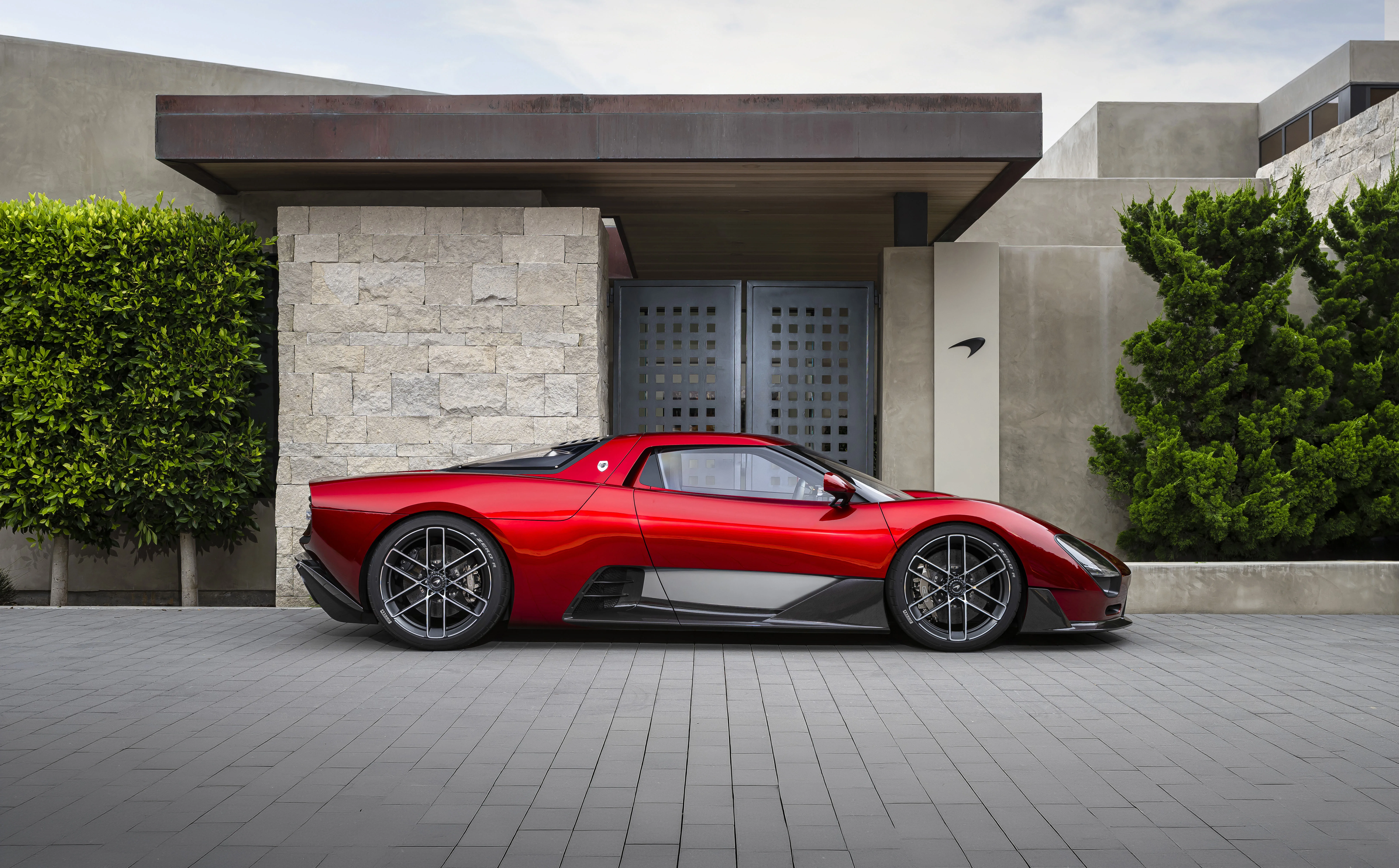
Full disclosure: The Torque Wrench hasn't driven it — nobody has, because the car on the grass at Las Vegas is a pre-production prototype, not a customer car. This is the verified breakdown, not a road test. The McLaren McL 6GT made its global public debut at the 2026 Concours at Wynn Las Vegas on November 2, 2026, after a private unveiling at Monterey Car Week in August. The headline is not a horsepower figure, because McLaren has not given one. The headline is a pedal. The 6GT has a clutch pedal, a six-speed manual gearbox, and rear-wheel drive, making it the first McLaren road car with a true manual since the F1 arrived in 1992. Thirty-four years. That is how long the world's most driver-obsessed supercar maker went without letting its customers change gear themselves.
To understand why that matters, you have to understand what the 6GT is not. It is not the McL 820, the core series-production supercar McLaren announced on October 30, 2026, with 820 PS and a 2027 arrival. Do not confuse the two cars, because the whole internet will, all week. The 820 is the volume car, the 750S's successor, the one that has to sell. The 6GT is a separate, low-volume heritage line sitting above the core range, a car McLaren describes as a newly positioned and highly exclusive type of supercar beyond its existing portfolio. It exists to make a point, not to make a quarter. And the point is this: in 2026, when every other supercar maker has decided the manual gearbox is dead, McLaren built one anyway, and wrapped it in carbon fibre and a 56-year-old dream.
Here is the honest frame for everything that follows. Confirmed: a mid-mounted V8, a six-speed manual, rear-wheel drive, a carbon monocoque with carbon bodywork, hydraulic steering, and a production version due in 2028. Reported but not confirmed by McLaren: around 500 cars at around US$1.5 million before options. Unknown: everything else (power, torque, displacement, weight, acceleration, top speed, and whether it will ever lap the Nürburgring). This preview exists because the car itself is news even without numbers: a major supercar maker betting its heritage line on three pedals. What it does not do is fill the blank spec sheet with guesses dressed as facts.
01
Fifty-Six Years Late, Right on Time
The 6GT takes its name and its mission from the M6GT, the road car Bruce McLaren began developing in the late 1960s from his M6A Can-Am racer. It was meant to be the first true McLaren road car, possibly the basis for a Le Mans program. Bruce drove the prototype as his personal car. The project ended when he died testing another McLaren prototype in June 1970, and the road car he wanted never reached production. McLaren Special Operations recently restored his original car using archive drawings, the original body molds, and period photographs, which is the kind of detail that tells you how seriously Woking takes this ghost. The 6GT is not a retro pastiche. It is a completion.
The shape says so before any press release does. Low and wide, with a long low nose, boxy haunches, a canopy-style rear glass screen, and a short Kamm tail borrowed from the M6A racer. The taillight motif is called the Racing Loop, inspired by the original M6GT. Bruce McLaren's signature sits in the engine bay. His M6GT registration plate appears as a tone-on-tone graphic. The Speedy Kiwi, the emblem of Bruce's New Zealand heritage, shows up on the fuel cap and on the gear knob, which is exactly where a driver will see it every single time they drive. None of this is subtle, and none of it is an accident. Every reference is placed where the owner, not the crowd, will find it.
Then came the two debuts, and the order matters. Monterey Car Week in August 2026 was the private unveiling, the car shown to the people McLaren most needed to convince. The Concours at Wynn Las Vegas on November 2, 2026, was the global public debut, the car on the grass in front of everyone else. A concours debut is a statement of intent all by itself: this is not a car being launched at a motor show with a light show and a countdown. It is a car being parked next to history and asked to hold its own. On a golf course full of cars worth a combined fortune, the 6GT's claim was not speed or rarity. It was a gearbox.
02
The Gearbox Is the Headline
Say it plainly, because the rest of the industry has spent a decade saying the opposite: the manual gearbox is not dead, it was just waiting for someone with the nerve to build one again. Every McLaren road car since the company restarted production has used a dual-clutch gearbox, and dual-clutch gearboxes are, by every objective measure, faster. They shift in milliseconds. They never miss. They never stall in traffic. They are also, for a certain kind of driver, boring in exactly the way a perfect tool can be boring. The 6GT rejects that bargain outright. It gives you three pedals, a lever tuned specifically for shift feel and throw, and an exposed mechanical linkage at the base of the lever, so the mechanism itself is part of the cabin's visual identity. You do not just feel the shift. You watch it happen.
The rest of the cabin follows the same philosophy, and it is the most interesting interior McLaren has shown in years. Hydraulic steering, not electric assistance, in an era when electric assistance is universal across the industry. Knurled machined-aluminium controls instead of capacitive touch surfaces. Boxed quilting and exposed gloss carbon in the cabin, referencing both the original M6GT and the company's racing history. McLaren's own framing is that every shift, throttle movement, and steering input is intended to feel deliberate, physical, and rewarding. That is marketing language, but the hardware backs it up: this is a car designed around the idea that the driver should have something to do.
There is a commercial logic here too, and it is worth stating because it explains why a company that spent years perfecting paddles would go back. The manual is the differentiator. In a market where every supercar has a dual-clutch gearbox, a hybrid system, and a 0-100 time within a tenth of its rivals, the only thing nobody else is selling is involvement. Ferrari will not build you a manual. Lamborghini will not build you a manual. Porsche will, in the 911, and Porsche sells every one it makes. McLaren has looked at that market and decided the rarest thing in the supercar world is not horsepower. It is a third pedal.
03
Carbon, V8, and Nothing Extra
Underneath the heritage story, the engineering is pure modern McLaren. A super-lightweight carbon-fibre monocoque, with carbon-fibre bodywork, continuing the lightweight philosophy that has defined McLaren road cars for decades. A mid-mounted V8, sending its power only to the rear wheels. That is the whole drivetrain story as McLaren has told it, and the restraint is deliberate: McLaren says the car is about the connection between driver and machine, not outright performance, and the hardware reflects that. No hybrid assistance is claimed anywhere in McLaren's own description, which in 2026 is itself a statement. While the core range heads toward hybridization (the McL 820's reported hybrid V8, the W1's 1,257 hp hybrid system), the heritage line goes the other way: engine, gearbox, rear wheels, and nothing between the driver and the road that does not need to be there.
What McLaren has not said is almost as informative as what it has. Displacement: undisclosed. Aspiration: undisclosed, and this preview will not guess, because secondary sources disagree with each other on it. Output: undisclosed. Torque: undisclosed. Weight: undisclosed. Acceleration and top speed: undisclosed. There is no Nürburgring lap time and no announced attempt, and this preview will not invent one or borrow another McLaren's record book. The car is a pre-production prototype, two years from customer cars, and McLaren is treating its spec sheet the way a poker player treats a hand: showing one card, the gearbox, and keeping the rest face down.
One estimate deserves a mention precisely because it is not a fact. Auto Express, working from the W1's new in-house V8 minus its hybrid elements and from the torque limits of a manual gearbox, suggests a realistic output around 800 bhp. That is a sensible guess from a good outlet, and it is still a guess. It is included here only so you can recognise it when you see it quoted elsewhere as if McLaren had announced it. McLaren has not. Until Woking publishes a number, the 6GT's power output is a blank, and any review telling you otherwise is filling that blank with hope.
04
The Numbers McLaren Won't Say Yet
Now the part of this preview that is mostly blank, stated without embarrassment, and with the reported figures labelled as reported. Price: not announced by McLaren. What is reported, via Car and Driver's Monterey coverage as repeated by multiple outlets, is around US$1.5 million before options. Volume: not confirmed by McLaren. What is reported, from the same coverage, is around 500 examples. Treat both numbers as the current best reporting, not as a price list, because McLaren has published neither, and final pricing could move before deliveries start in 2028. If those reported numbers hold, the 6GT sits well above the core range and well below the seven-figure Ultimate tier, in a space of its own: expensive enough to be exclusive, not so expensive that it is only a museum piece.
And do not confuse this car with the McL 820, because the confusion is already happening and it will only get worse. The 820 is the core car: 820 PS, due 2027, not yet shown, the 750S's successor in practice. The 6GT is the heritage car: manual V8, due 2028, shown as a prototype, sitting above the core range in a new tier. Same McL prefix, different jobs, different years, different customers. The prefix debuted on the 6GT at Monterey, then McLaren applied it to the core range with the 820 announcement in October. One badge family, two very different bets: the 820 bets that McLaren's future is hybrid power and a unified naming system, and the 6GT bets that its future also includes a clutch pedal.
What to watch, then, is simple, and it is all still ahead. In 2028, McLaren owes the world a production car to go with this prototype: the power figure, the weight, the price, and the volume, all confirmed by Woking rather than reported by outlets. The numbers that will decide whether the 6GT is a landmark or a curiosity are not the ones on the badge. They are the ones McLaren has not published yet, plus one question no spec sheet answers: does a manual gearbox, in a carbon supercar, at a reported US$1.5 million, still make a driver feel something no paddle shift can? McLaren has bet a whole new model line that it does. For the first time since 1992, you will be able to find out for yourself, with your left foot.
“McLaren spent 34 years perfecting the paddle shift. Then it built a car with a clutch pedal and called it the future.”
Technical specifications
- Status
- Pre-production prototype: private unveiling Monterey Car Week, Aug 2026; global public debut Concours at Wynn Las Vegas, Nov 2, 2026
- Production
- Production version due 2028, in a new highly exclusive tier beyond McLaren's core and expanded portfolio
- Engine
- Mid-mounted V8, internal combustion (displacement, aspiration and output undisclosed by McLaren)
- Transmission
- Six-speed manual with exposed mechanical linkage, driving the rear wheels only
- Chassis / body
- Carbon-fibre monocoque with all-carbon bodywork
- Steering / controls
- Hydraulic steering; knurled machined-aluminium controls; gear lever tuned for shift feel and throw
- First since
- First McLaren road car with a manual gearbox since the F1 (1992)
- Heritage
- Tribute to Bruce McLaren's unfinished M6GT road car (late 1960s, based on the M6A Can-Am racer)
- Price / volume (reported)
- Around US$1.5 million before options, around 500 examples — reported via Car and Driver, NOT confirmed by McLaren
- Performance / Nürburgring
- None disclosed: no power, weight, 0–100, or top speed; no lap time, no attempt announced
Preview
McLaren McL 6GT — November 4, 2026
No score yet — the car hasn't debuted. Full verdict after launch.
What we love
- A clutch pedal, in 2026, from a major supercar maker. The rarest option in the industry, standard.
- The exposed linkage: the mechanism is the interior design, not something hidden under a boot.
- Hydraulic steering and knurled aluminium instead of electric assistance and touch surfaces.
- Heritage with a point: the M6GT references are for the driver to find, not the crowd to photograph.
- The restraint: one card shown (the gearbox), the rest of the spec sheet kept face down, honestly.
What could be better
- There is no spec sheet: power, weight, price and volume are all undisclosed or merely reported.
- Two years to wait: the production car is due in 2028, and prototypes have a habit of changing.
- Reported US$1.5 million, if it holds, buys a lot of involvement — and prices out nearly everyone.
- Confusion guaranteed: the McL 820 and the McL 6GT will be mixed up constantly, all year.
- No lap, no test, no verdict: everything here is a prototype's promise, not a driven car.
Verdict
Strip away the heritage story and the McL 6GT is a gamble with a gearbox attached, and the gearbox is the reason the gamble is credible. McLaren did not need to build this car. Its core range sells on dual-clutch speed and hybrid power, and a manual heritage line sells to a fraction of that market. Building it anyway, in carbon fibre, with hydraulic steering and an exposed linkage, is a company deciding that driver involvement is not a niche to be managed but an identity to be defended. That is either confidence or nostalgia, and with the 6GT's hardware, it reads as confidence.
But a prototype is not a verdict, and this preview will not pretend otherwise. The 6GT has no power figure, no weight, no confirmed price, and no confirmed volume. Its character, the thing that made the F1 matter, is entirely unproven, because no journalist has driven it and no customer car exists. The reported US$1.5 million and 500 cars, if they hold, make it a collector's car first and a driver's car second, which is the exact tension the whole project has to resolve: a car built for involvement, priced for investment.
For now, the McL 6GT is the most honest throwback in the business: a V8, three pedals, and a 56-year-old dream, with the numbers still to come. There is no score until it is shown in production form, let alone driven. But the question it asks the establishment (what happens when the fastest cars get boring?) already has the whole supercar world paying attention. And the clutch pedal, it turns out, was the perfect messenger: small, mechanical, and entirely unbothered by the noise around it.
Quick answers
Asked, answered.
What is the McLaren McL 6GT?
A pre-production prototype previewing a highly exclusive production supercar due in 2028. It pairs a mid-mounted V8 with a six-speed manual gearbox driving the rear wheels, on a carbon-fibre monocoque with carbon bodywork. It was unveiled privately at Monterey Car Week in August 2026 and made its global public debut at the Concours at Wynn Las Vegas on November 2, 2026.
Why is the manual gearbox such a big deal?
It is the first McLaren road car with a true manual gearbox since the F1 arrived in 1992 — a 34-year gap. Every McLaren road car since the company restarted production has used a dual-clutch gearbox. The 6GT also uses hydraulic steering and an exposed shift linkage, built around driver involvement rather than outright speed.
How much power does the McL 6GT make?
Undisclosed. McLaren has published no power, torque, displacement, weight, acceleration, or top-speed figure. Auto Express estimates around 800 bhp, but that is an estimate, not a McLaren announcement, and secondary sources disagree on whether the V8 is naturally aspirated or turbocharged.
How much will the McL 6GT cost, and how many will be built?
Neither is confirmed by McLaren. Reporting via Car and Driver puts the price around US$1.5 million before options and volume around 500 examples, but McLaren has published no price and no volume, and final figures could move before the 2028 production car arrives.
Is the McL 6GT the same car as the McL 820?
No. The McL 820 is McLaren's next core series-production supercar (820 PS, due 2027, not yet shown). The McL 6GT is a separate, low-volume heritage line sitting above the core range, due in 2028, shown as a prototype. Same McL prefix, different cars, different years, different jobs.
Related reviews
Latest review
McLaren McL 820Preview
The Supercar McLaren Named Before It Showed
Read the review →
Verified Nürburgring lap
2026 Hyundai Ioniq 6 N
2026 Hyundai Ioniq 6 N Review: 641 HP, 7:35.42 Lap & Verdict
Read the review →
More from the garage
Denza ZPreview
The 1,582-hp Supercar From a Brand You've Never Heard Of
Read the review →