Explainer
The Engine Refused to Die. It Hired an Electrician.
16.3% of US sales. 1,258 hp. 10,000 rpm.
The Hybrid Fight-Back · November 13, 2026 · The Torque Wrench · Explainer
16.3%
US hybrid share, mid-2026 — a record
1,258hp
McLaren W1, the most powerful McLaren ever
1,050CV
Ferrari 849 Testarossa, Maranello’s flagship series-production car
10,000rpm
Temerario V8 redline
5M+
Toyota hybrids planned for 2026
$108,600
Corvette E-Ray from — the cheapest way in
Full disclosure: The Torque Wrench hasn’t driven it — there is no single ‘it’ to drive. This is a thesis built on verified sales data and five manufacturers’ own numbers, not a road test. The claim is simple: the hybrid stopped being the compromise and became the counter-attack. The numbers below are traced to their sources, and the places where the sales chart disagrees with the hype are the whole point of the piece.
Five years ago, the story was settled. The engine was dead, the battery had won, and the hybrid was the awkward middle child — a stopgap for people too nervous to commit. Toyota was mocked for it. Ferrari was pitied for it. Porsche was lectured about it. Then the market voted. In the middle of 2026, hybrids took a record 16.3 percent of American new-car sales — up from about 5 percent in 2023 — while EV sales fell at GM by 62 percent in a single quarter. The stopgap just became the best-selling idea in the industry.
And at the top of the market, the same thing happened louder. The fastest new flagship supercars — Ferrari’s 849, Lamborghini’s Temerario, McLaren’s W1 — are all hybrids, even as the outright top-speed crown belongs to an EV: the Yangwang U9 Xtreme’s single-direction 503.17 km/h run. Porsche has confirmed the 911 will never go fully electric. The electric hypercar, meanwhile, is ending production at 71 cars in total — 61 built, the final ten Nevera Rs still in build — against an original plan of 190 (150 standard plus 40 R). Somebody owes the hybrid an apology. This is it — with receipts.
R03Chapter 01
The Sales Chart Fired the First Shot
Start with the number that matters, because it is not a car number. It is a market number. Hybrids reached 16.3 percent of US new-car sales at mid-2026, according to Cox Automotive — an all-time record. The Center for Automotive Research, measuring the first half slightly differently, put it at 15.4 percent. Argue about the decimal if you like. The direction is not arguable: hybrids held about 5 percent of the market in 2023, about 13 percent in mid-2025, and now a record. While pure-electric share fell.
Toyota is the reason, and Toyota is the punchline. The company that spent a decade being called behind on EVs sold 4.6 million hybrids in 2025 — a record — and plans more than 5 million in 2026, the first time it has ever aimed that high. In the third quarter of 2026, electrified cars were 57.4 percent of everything Toyota sold in North America. The RAV4 Hybrid alone is up 43.6 percent this year. Toyota did not win the argument. The argument came to Toyota.
The other side of the chart is just as loud. GM’s EV sales fell 62 percent in the third quarter of 2026. Ford’s fell 40.7 percent in the second. After the US federal EV tax credit ended in September 2025, American EV sales fell 48.9 percent month-over-month in October 2025, and the EV share of the market was 6.4 percent in the third quarter of 2026, according to Cox Automotive. None of this means the EV is finished — it isn’t, and the last chapter of this piece says so plainly. But the breathless pace is over, and the gap it left is being filled by the car that never needed a charger, a tax credit, or an apology.
1,258 hp
The McLaren W1’s hybrid V8 — the most powerful McLaren ever. Its battery holds 1.4 kWh, good for about two miles of silent running. The hybrid era’s flagship is an engine with an electrician, not a battery with a badge.
The compromise just became the counter-attack.
— The Torque Wrench
R04The Answer
Explainer
The Hybrid Fight-Back — November 13, 2026
An explainer, not a verdict
The Verdict
So who wins? The battery didn’t. The engine didn’t. The compromise did — and the compromise is the most interesting car on sale right now. Five years ago the hybrid was the car you bought when you couldn’t decide. Today it is the car the fastest manufacturers on earth chose on purpose: Ferrari’s flagship, Lamborghini’s flagship, McLaren’s most powerful car ever, and the 911’s future. The sales chart agrees. The only people still calling the hybrid a stopgap are the people who predicted its funeral.
That does not make the EV a failure. The U9 Xtreme’s 503.17 km/h stands. The Luce's 2027 deliveries are fully allocated. The EV will come back, cheaper and better charged, and when it does the hybrid will quietly become the old guard — the same way the hybrid just did it to the pure combustion car. Every technology gets its decade. The hybrid’s decade is this one, and it is spending it very well.
The Wrench’s rule has always been simple: if it doesn’t make you grin like an idiot, what’s the point? A 10,000-rpm V8 with electric torque fill makes you grin like an idiot. A 1,258-hp McLaren with a 1.4 kWh battery makes you grin like an idiot. The engine was supposed to die. Instead it hired an electrician — and the electrician brought a turbo, three motors, and a record sales chart. Sensible was never supposed to be this much fun. Tighten it ’til it sings.
What we love
- The Temerario’s 10,000-rpm V8 exists because of the hybrid system, not in spite of it — the motors fill the torque hole so Lamborghini could build a turbo engine that behaves like a racing engine.
- The W1’s battery holds 1.4 kWh. That is not a compromise — it is a confession that the electric motor is there to make the V8 better, not to replace it.
- The 911 GTS T-Hybrid’s electric turbo kills lag dead. The most useful hybrid on sale is the one you never notice.
- The E-Ray: 655 hp, all-wheel drive, 2.5 seconds to 60, from $108,600. The cheapest way into the fight-back.
- The sales chart: 16.3 percent, a record, with Toyota planning 5 million hybrids in 2026. The market settled the argument while the internet was still having it.
What could be better
- Weight. The Temerario carries three motors, a battery, and all-wheel drive — the hybrid tax is real, and no amount of torque fill hides it in the corners.
- Complexity. A twin-turbo V8 plus three motors plus an 8-speed dual-clutch is three powertrains wearing a trench coat. Out of warranty, that is a brave purchase.
- The E-Ray dies after 2026. The idea survives in the Grand Sport X, but the car that proved the idea is already a one-generation footnote.
- The 849 costs €460,000 and the W1 costs $2.1 million. The fight-back’s flagships are for people who already won — the affordable hybrid is a RAV4, not a Ferrari.
- Plug-in hybrids are slipping even as regular hybrids surge — the charge-it-yourself half of the story is not keeping up, and the industry has not explained why.
Technical specifications
- McLaren W1
- 1,275 PS (1,258 hp) · 4.0L twin-turbo V8 + e-motor · 0–200 km/h 5.8 s · 350 km/h · 399 cars, all allocated · ~$2.1M
- Ferrari 849 Testarossa
- 1,050 CV (1,036 hp) · 3,990cc twin-turbo V8 + 3 motors · 0–100 km/h 2.3 s · over 330 km/h · from €460,000
- Lamborghini Temerario
- 920 CV (907 hp) · 4.0L twin-turbo V8 + 3 motors · 10,000 rpm redline · 0–100 km/h 2.7 s · 343 km/h · from $387,649 US
- Porsche 911 Carrera GTS T-Hybrid
- 532 hp · 3.6L eTurbo flat-six · 610 Nm · 0–100 km/h 3.0 s · 312 km/h · 8-speed PDK
- Chevrolet Corvette E-Ray
- 655 hp · 6.2L V8 + 160 hp front motor · 0–60 mph 2.5 s · quarter mile 10.5 s · from $108,600 (2026)
- US hybrid share
- 16.3% of new-car sales at mid-2026 (Cox Automotive) — a record; 15.4% in H1 2026 (Center for Automotive Research)
- Toyota hybrids
- 4.6M sold in 2025 (record); 5M+ planned for 2026; electrified = 57.4% of Toyota’s Q3 2026 North American sales
- The EV side
- GM EV sales −62% in Q3 2026; Ford EV −40.7% in Q2 2026; US EV share 6.4% (Cox, Q3 2026)
R05Chapter 02
The Flagships Are All Hybrids Now
Now look up, because the top of the market tells the same story with better lighting. The McLaren W1 — the successor to the P1, the most powerful McLaren ever — is a hybrid. A 4.0-litre twin-turbo V8 making 928 PS (916 hp), plus an electric motor worth 347 PS (342 hp) more, for 1,275 PS (1,258 hp). It does 0–200 km/h in 5.8 seconds, 0–300 in under 12.7, and tops out at 350 km/h. Its battery holds 1.4 kWh — enough for about two miles of silent running. The electric motor is not the point of the car. It is the turbo lag’s worst enemy and the V8’s best friend.
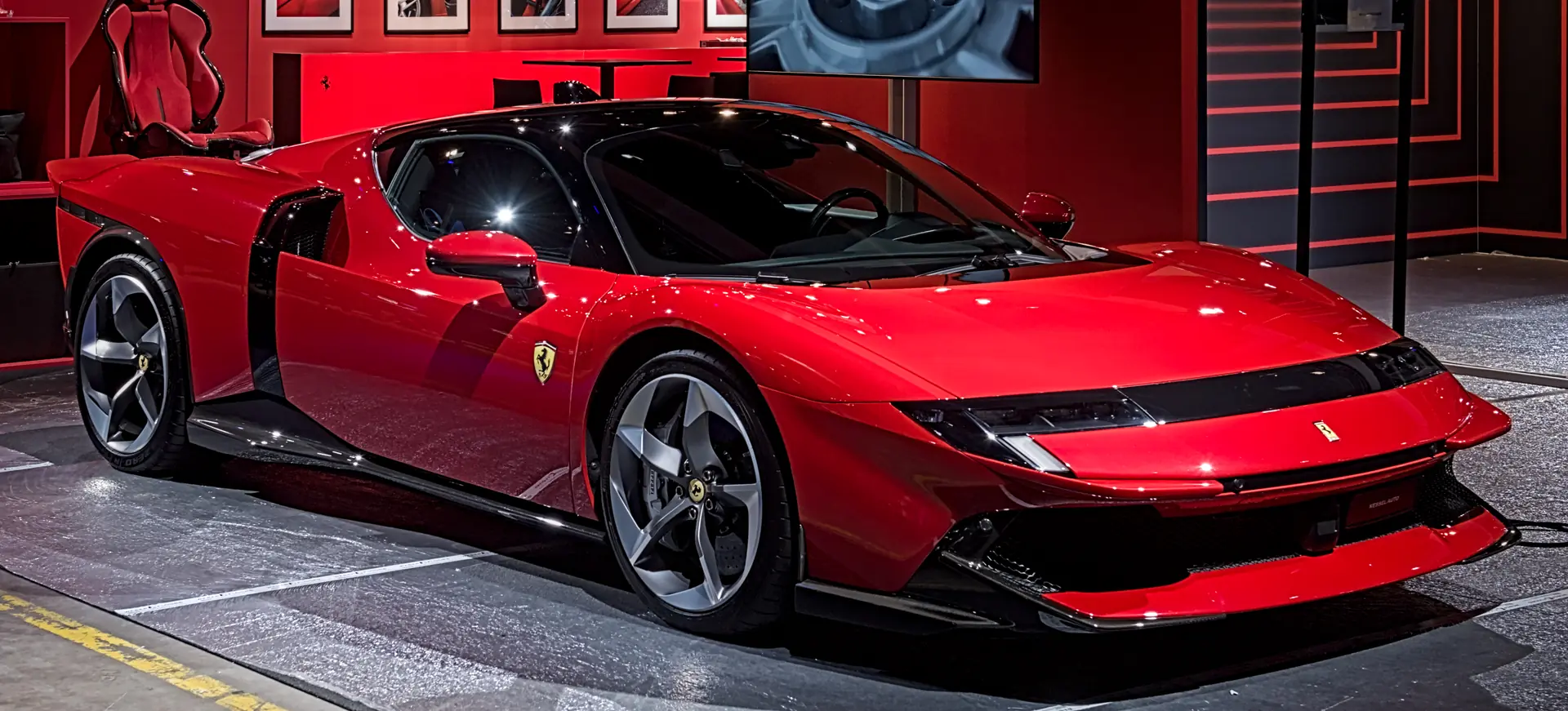
Ferrari’s flagship is the same idea in a louder suit. The 849 Testarossa — the name alone tells you Maranello means it — pairs a re-engineered 3,990cc twin-turbo V8 with three electric motors for 1,050 CV, 830 of them from the engine. It does 0–100 km/h in 2.3 seconds and costs €460,000 for the coupé. The electric motors fill in the torque while the turbos wake up, which means the car feels like it has no turbo lag at all. Ferrari’s first pure EV, the Luce, is a €550,000 scarcity play with fewer than 500 cars in the first production run, first customer cars arriving in late 2026 in Europe (US from Q2 2027). Its flagship is a hybrid. That is not an accident. That is a decision.
And then there is the Temerario, the car that should not exist. Lamborghini replaced the Huracán’s naturally aspirated V10 — the engine its customers loved most — with a twin-turbo V8 and three electric motors making 920 CV combined. The V8 alone makes 800 CV and revs to 10,000 rpm, the highest-revving production turbocharged V8. The hybrid system is what makes that possible: the motors fill the torque hole at low revs, so Lamborghini could build a turbo engine that behaves like a racing engine. The hybrid did not tame the bull. It gave the bull a bigger arena.
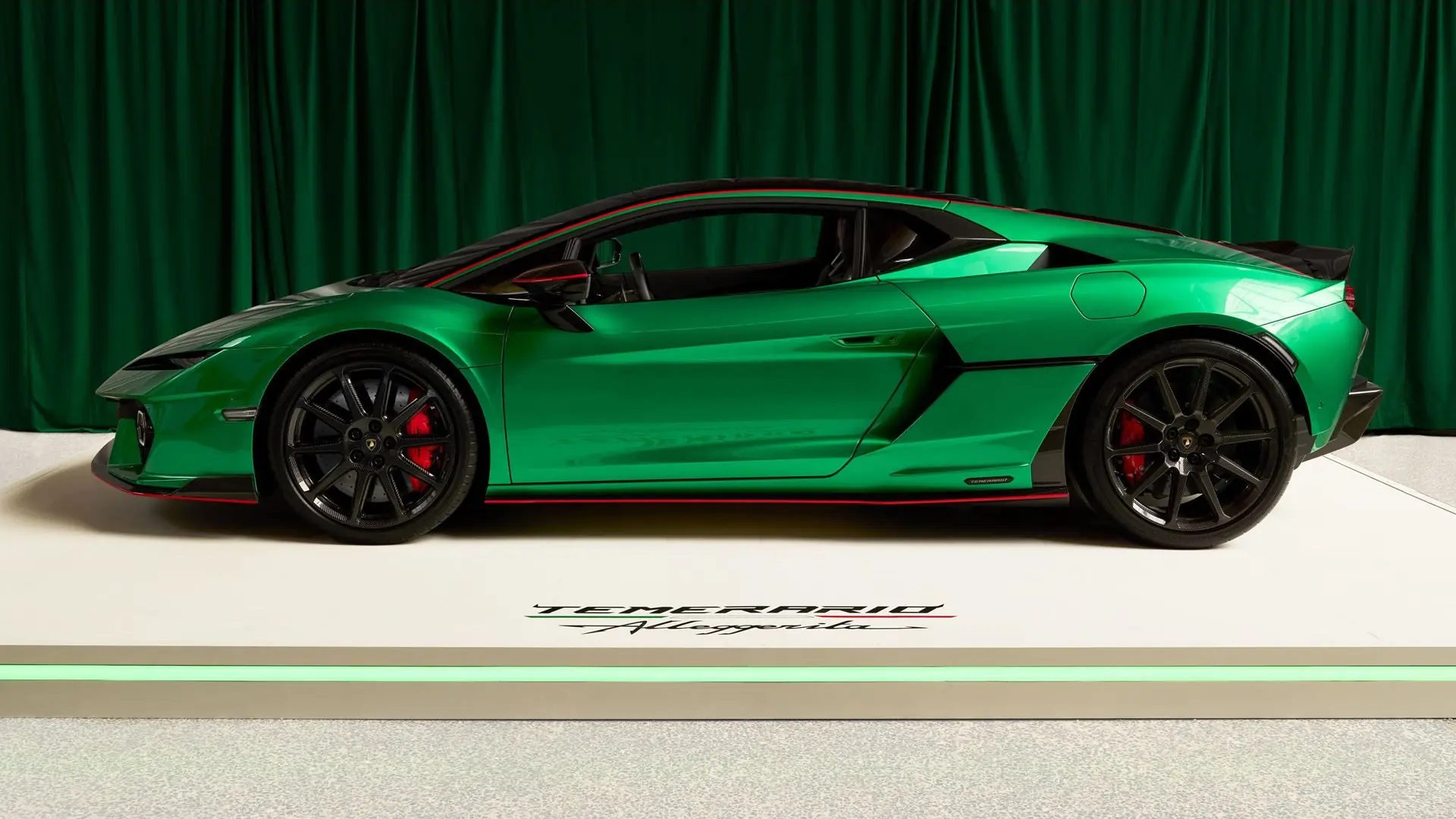
“The engine didn’t die. It hired an electrician.”
R06Chapter 03
The Middle of the Market Moved First
The flagships make the noise, but the middle of the market made the money. The Porsche 911 Carrera GTS — a popular 911, though the base Carrera and Carrera S are the range's true volume cars — is now a T-Hybrid: a 3.6-litre single-turbo flat-six with an electric turbo, 532 hp combined, 0–100 km/h in 3.0 seconds. The electric motor spins the turbo up before the exhaust gases get there, which means no lag, no waiting, no compromise. And Porsche has now said the quiet part out loud: at its October 2026 Capital Markets Day, CEO Michael Leiters confirmed the 911 will never go fully electric. The hybrid is not the 911’s stepping stone. It is the 911’s future.
America’s entry is the cheapest way into the argument. The Corvette E-Ray — the first hybrid Corvette, the first all-wheel-drive Corvette — pairs the Stingray’s 495-hp 6.2-litre V8 with a 160-hp front motor for 655 hp combined, 0–60 mph in 2.5 seconds, from $108,600. It is quicker to 60 than the track-focused Z06, and it will drive through a snowstorm. The E-Ray’s production ends after the 2026 model year, which sounds like a defeat until you read the next line: the hybrid all-wheel-drive slot passes to the 2027 Grand Sport X. The car dies. The idea gets promoted.
And underneath all of it, the volume story: Honda sold a record 59,668 CR-V Hybrids in the third quarter — 53 percent of all CR-Vs. Hyundai’s hybrid sales rose 35 percent in the quarter, also a record. The hybrid is no longer the eco option on the configurator. It is the default powertrain of the best-selling cars in America. The fight-back did not start in Maranello. It started in the RAV4’s order book.
R07Chapter 04
The Counter-Argument: The EV Isn’t Dead
Honesty demands the other side, because the other side has numbers too. The EV owns the top-speed crown: the Yangwang U9 Xtreme did 503.17 km/h, and no hybrid has touched that number. The Nürburgring is a different story — the hybrid AMG One’s 6:29.090 is half a minute quicker than the U9’s 6:59.157. EV sales are still growing in absolute terms in most of the world — the cooling is a pace problem, not a collapse. And the Ferrari Luce, the first pure-electric Ferrari, was reported to have sold out its first 88-car allocation for China before a single customer car was delivered — though dealer checks later disputed the sellout and Ferrari never confirmed it. The EV is not dead. It is niche, scarce, and expensive — and scarcity, as Ferrari keeps proving, is a business model.
What the manufacturers actually did is more interesting than either side’s slogan. Ferrari delayed its second EV to 2028 — Reuters’ sources called demand for a high-performance EV ‘zero’ — and cut its 2030 EV target from 40 percent of the lineup to 20 percent. Lamborghini scrapped its first EV, the Lanzador, entirely; the fourth model due around 2029 will be a plug-in hybrid GT instead. Porsche rebalanced its whole strategy and now expects combustion engines to be about two-thirds of its 2030 sales. Nobody is cancelling the EV. Everybody is buying time with hybrids while the EV figures out charging, pricing, and resale value.
That is the real fight-back, and it is smarter than a funeral. The hybrid is not the EV’s enemy. It is the EV’s alibi — the car that lets a manufacturer keep selling fast, loud, profitable machines while the electric future sorts itself out. The engine did not win. The battery did not win. The compromise won, because the compromise was the only thing that ever worked for everyone. The Wrench has spent years mocking sensible cars. This one is sensible, and it revs to 10,000 rpm. We are as confused as you are.