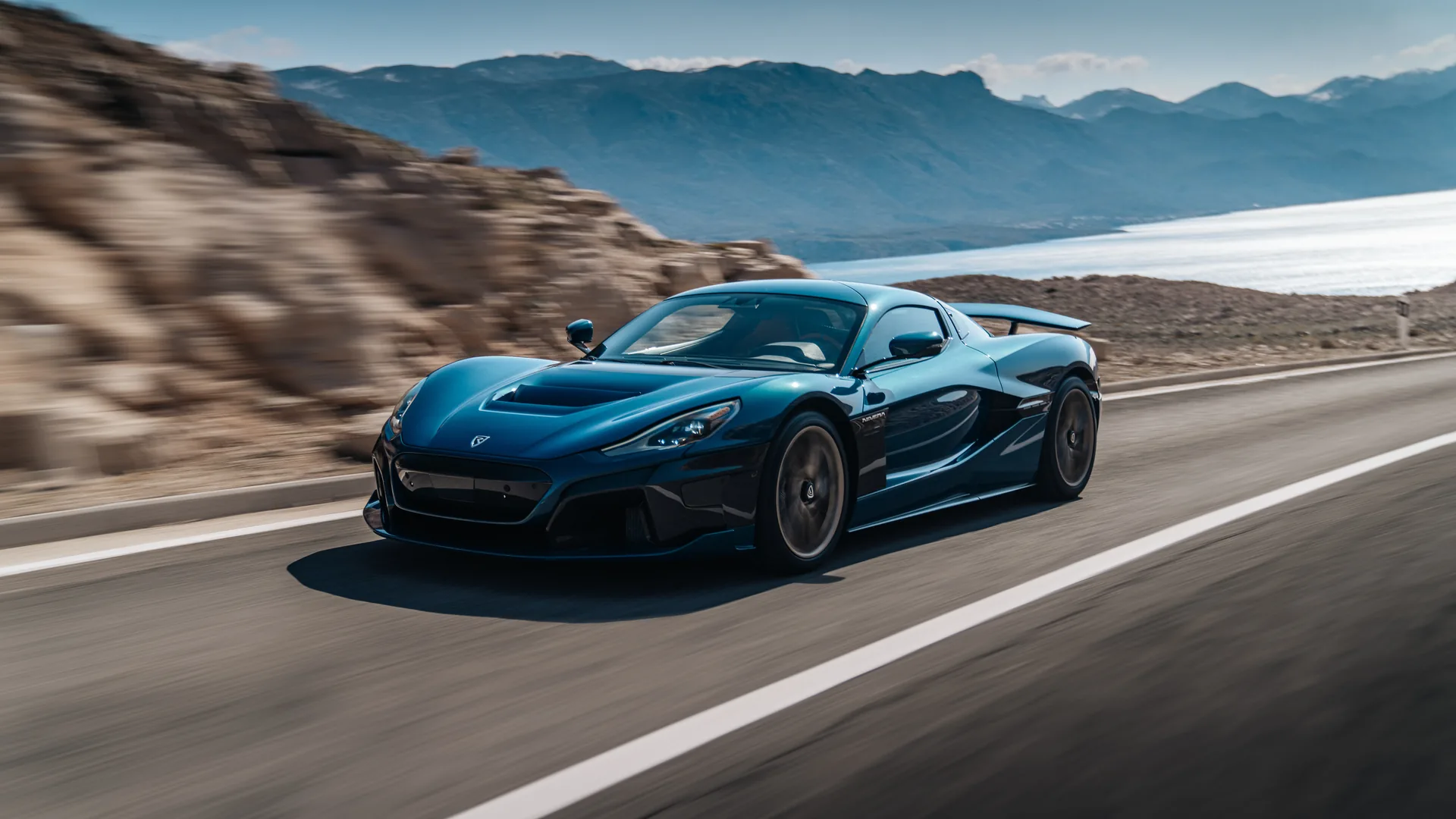
Explainer — Rimac
Rimac Built the Fastest EV of Its Era. Then It Stopped at 71 Cars.
1,914 hp as quoted (1,888 imperial). 7:05 at the Ring. 71 cars.
Rimac Nevera · November 12, 2026 · The Torque Wrench · Explainer
61
cars built, 71 total of 190 planned
1,914PS
standard Nevera, quad-motor · 1,888 hp imperial
7:05.298
Nürburgring, 20.832 km, August 2023
431.45km/h
Nevera R top speed, Dewesoft-verified
25.79s
Nevera R 0–400–0 km/h
47
world records across both cars (23 + 24)
Full disclosure: The Torque Wrench hasn’t driven it — and neither have you, unless you are one of the 71. Standard Nevera production has ended; the final ten Nevera R units remain in build, bringing the planned total across both versions to 71. Its records are in the books. This is the verified retrospective, not a road test — every number below is traced to Rimac, an independent verifier, or the Nürburgring’s own list, and the places where the sales chart disagrees with the stopwatch are the whole point of the piece.
Start with the sentence that ended it. On November 11, 2026, Mate Rimac walked through his own production line on Instagram and said the Nevera was done: 71 cars in total, 51 standard and 20 R, against a plan of 190 — 61 built so far, the final ten Nevera Rs in build now, deliveries by the end of the year, and then the line goes quiet. No successor announced. No apology offered. Rimac called it ‘mission accomplished’ — and the internet, being the internet, called it a flop.
Both sides have a case, and both sides are wrong about the other half. The sales chart is brutal: 37 percent of plan, a $2.2 million car that found 71 buyers in four years. The stopwatch is just as brutal in the other direction: 47 world records, a Nürburgring lap that stood for about 20 months, and a top speed no other production EV had touched — until the Yangwang U9 Track Edition took it at 472.41 km/h on August 8, 2025, then 496.22 km/h on September 14, 2025, then the U9 Xtreme's single-direction 503.17 km/h on November 1, 2026. This piece is the argument, heard in full, with the numbers as the only judge.
R03Chapter 01
The Numbers Were Never the Problem
Begin with the car itself, because the car is not the problem. Four electric motors, one at each wheel, 1,408 kW — 1,914 PS in the figure Rimac quotes, 1,888 in imperial horsepower — and 2,340 Nm of torque, vectored wheel by wheel faster than any mechanical differential could ever manage. The battery is 120 kWh at 800 volts. The result, on a drag strip in 2023: 0–60 mph in 1.74 seconds, a quarter mile in 8.25, and 0–400–0 km/h in 29.93 seconds. Those are not claims. They are independently verified records, set in a single day at Papenburg on May 17, 2023 — 23 of them, with Dewesoft and RaceLogic watching the timing gear.
Then came the R. August 2024: 2,107 PS (2,078 hp), revised aero, new tyres, a smaller 108 kWh battery, and a brief to beat everything the standard car had done. On July 9, 2025, at the same Papenburg track, it took 24 more records: 0–60 in 1.66 seconds, the quarter in 7.90, 0–400–0 in 25.79 seconds — 4.14 seconds faster than the standard car, and 2.04 faster than the Koenigsegg Jesko Absolut’s record at the time. Its top speed, measured by Dewesoft at 431.45 km/h, was the fastest a production EV had ever gone — until the Yangwang U9 Track Edition beat it at 472.41 km/h on August 8, 2025 (then 496.22 km/h on September 14, 2025, then the U9 Xtreme's 503.17 km/h on November 1, 2026).
And the lap. August 18, 2023, Martin Kodrić, Michelin Cup 2 R tyres, a full 20.832 km lap in 7:05.298 — 20 seconds under the Tesla Model S Plaid’s production-EV record, verified by TÜV SÜD and onboard telemetry. The shorter 20.6 km layout: 7:00.928. The car that did it became the Nevera Time Attack, 1 of 12. For about 20 months, that was the fastest a production electric car had ever gone around the Nürburgring — until the Xiaomi SU7 Ultra beat it by a third of a second in April 2025. The number is on our own leaderboard, and it is not going anywhere.
71 cars
The final Nevera production total — 51 standard cars and 20 Nevera Rs — against a plan of 190. The last 10 Rs are in build now, with deliveries by the end of 2026.
The stopwatch says legend. The sales chart says flop. History only keeps one of those.
— The Torque Wrench
R04The Answer
Explainer
Rimac Nevera — November 12, 2026
An explainer, not a verdict
The Verdict
On the sales chart, the Nevera is a flop. Seventy-one cars against a plan of 190 is a forecast missed by nearly two-thirds, and no amount of record-breaking changes the arithmetic of a factory sized for a market that never arrived. If the Nevera was a product, the product failed.
But the Nevera was never really a product. It was a proof — that four motors and a clever Croatian software team could outrun everything with a combustion engine, that an EV could hold the production-EV Nürburgring record, that a startup could build a hypercar from nothing and sell it to Nico Rosberg. The proof worked. It worked so well that the know-how behind it now shapes a Bugatti, and its founder now runs Bugatti. Products get discontinued. Proofs get promoted.
So: legend. Not because 71 is a good number — it isn’t — but because the number that matters was never 71. It was 47 records, one 7:05.298, and a company transformed. The market voted with its wallet, and the wallet said no. History votes with the stopwatch, and the stopwatch doesn’t care how many were built. Seventy-one cars. Forty-seven records. One legend, sold short.
What we love
- Four motors, one per wheel, torque-vectoring faster than any mechanical diff — the whole car is a software trick that happens to have wheels.
- 23 world records in a single day in 2023, then the R took 24 more in 2025. Not a press release. Independently verified, twice.
- A 7:05.298 at the Nürburgring in a 2,300-kg electric car — a lap that still sits on our leaderboard three years later.
- The know-how it proved helped make the Bugatti Tourbillon possible. The Nevera’s expertise is the reason Rimac now runs Bugatti.
- The R: 2,107 PS (2,078 hp) and a Dewesoft-verified 431.45 km/h — the fastest production EV of its era, before the U9 Track Edition's 472.41 km/h on August 8, 2025 took the crown.
What could be better
- 71 of 190 planned. The market for a $2.2M electric hypercar turned out to be 71 people, and Rimac spent four years finding them.
- Its records didn’t last: the Yangwang U9 Xtreme took the top-speed crown and the electric super sports car class record at the Ring (6:59.157), and Koenigsegg reclaimed 0–400–0 within a month of the R’s run.
- No direct replacement announced. The line ends, the factory moves on, and the Nevera becomes a handover instead of a dynasty.
- At roughly 2,300 kg, it is a very fast heavyweight — the Ring lap is heroic, but physics still charges by the kilo.
- The 1,914 hp figure is metric PS quoted as horsepower — the imperial number is 1,888. Rimac’s headline needs a footnote, and this is it. The R’s 2,107 is PS too — 2,078 hp imperial.
Technical specifications
- Powertrain
- 4 electric motors (1 per wheel) · 120 kWh battery (standard) / 108 kWh (R) · 800V
- Power
- 1,914 PS (1,888 hp; 1,408 kW) · 1,726 lb-ft (2,340 Nm) — R: 2,107 PS (2,078 hp; 1,550 kW) · 1,726 lb-ft (2,340 Nm)
- 0–60 mph
- 1.74 s (standard, with 1-ft rollout) · 1.66 s (R)
- 0–400–0 km/h
- 29.93 s (2023) · 25.79 s (R, 2025)
- Top speed
- 412 km/h (standard) · 431.45 km/h (R, Dewesoft-verified)
- Nürburgring
- 7:05.298, 20.832 km — Aug 18, 2023, Martin Kodrić, Cup 2 R
- Range
- 489 km (WLTP, Rimac official)
- Weight
- ≈2,300 kg (kerb, standard; R lighter on its smaller battery)
- Price
- From ~$2.2M · R from €2.3M (~$2.7M)
- Production
- 71 cars total (51 + 20 R) of 190 planned — 61 built, 10 R in build
R05Chapter 02
The Sales Chart Is the Prosecution’s Exhibit A
Now the other side. Rimac planned 150 standard Neveras and 40 Rs. It built 51 and 20. Thirty-seven percent of the plan. Deliveries began in 2022 — Nico Rosberg took car number one that August — and by May 2024 Mate Rimac was already telling interviewers that more than 50 cars had been delivered, a pace he admitted was slower than anticipated. Four years later, the total is 71.
The defence will say the market never existed, and the defence is mostly right. A $2.2 million electric hypercar from a Croatian company most buyers had never heard of, sold by inquiry, with no dealer network and no racing pedigree to lean on — the addressable market was always going to be counted in dozens, not hundreds. The Nevera R, at €2.3 million, found 20 of its 40. Even Ferrari, with a century of badge equity, caps its halo cars in the hundreds and sells them to people already on the list. Rimac asked 190 strangers to wire seven figures to Sveta Nedelja. Seventy-one said yes.
But the prosecution has a point too, and it is the only point that matters to a car company: a production plan is a promise to suppliers, to staff, to investors. Missing it by 63 percent is not a rounding error. It means the factory, the tooling, and the 190-car business case were all sized for a market that did not show up. The Nevera did not fail as a car. It failed as a forecast — and in the car business, the forecast is the car.
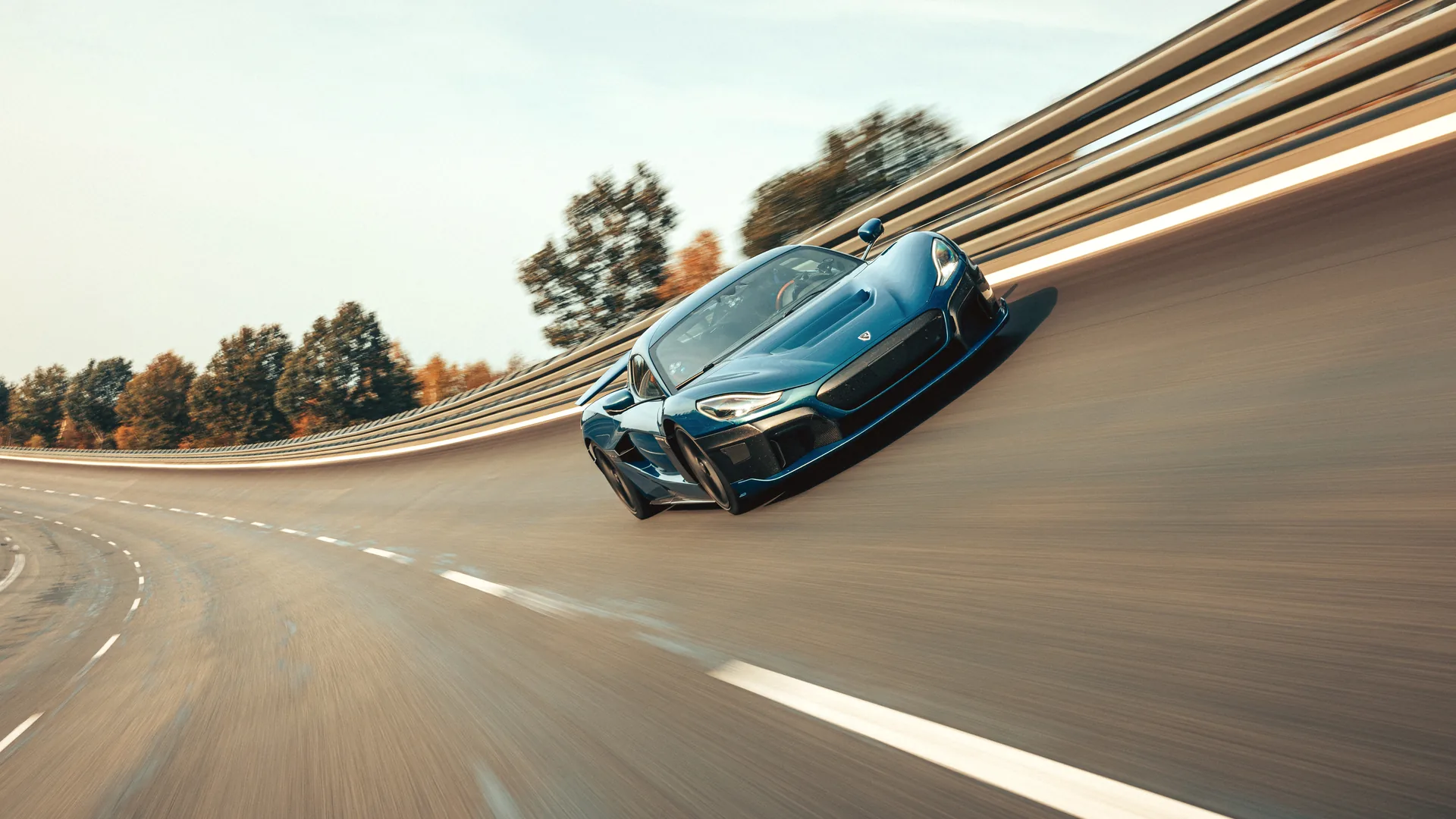
“Nobody remembers how many were built. Everybody remembers what it did.”
R06Chapter 03
The Records Didn’t Stay Records
Here is the part the legend crowd skips. The Nevera’s records were real, verified, and beaten — which is what records are for. The Yangwang U9 Xtreme, a car from a company that sells a million EVs a year, took the top-speed crown at 503.17 km/h on November 1, 2026 — after the U9 Track Edition had already taken it from the Nevera R at 472.41 km/h on August 8, 2025 — and already held the Nürburgring electric super sports car class record at 6:59.157. The Nevera’s 7:05.298 still sits on our leaderboard — it is a serious lap, and it will sit there for a long time — but it is no longer the record.
And the 0–400–0 crown lasted about a month. The Nevera R’s 25.79 seconds, set July 9, 2025, was reclaimed on August 7 by the Koenigsegg Jesko Absolut at 25.21 seconds — the same car the R had dethroned, on the same discipline, with a faster time. Koenigsegg builds combustion hypercars in a shed in Sweden and still owns the discipline. That stings, and it should: the Nevera’s whole pitch was that electricity had ended the argument. The argument, it turns out, is still open.
None of this makes the records fake. Every one of them was independently verified — Dewesoft, RaceLogic, TÜV SÜD — and the R's 431.45 km/h top speed was the fastest production EV ever measured until the U9 Track Edition's 472.41 km/h on August 8, 2025 took the outright crown (then 496.22 km/h on September 14, 2025, then the U9 Xtreme's 503.17 km/h on November 1, 2026). What it makes them is temporary, which is the honest condition of every record ever set. The Nevera’s tragedy is not that its records fell. It is that they fell to cars with bigger companies behind them, which is the same reason only 71 Neveras exist.
R07Chapter 04
What 71 Cars Actually Bought
So what did Rimac get for 71 cars? Start with the sentence Mate Rimac keeps repeating: without the Nevera, the Bugatti Tourbillon would not exist. The Nevera proved Rimac’s electric-powertrain, torque-vectoring and battery expertise — the know-how Rimac Technology then built into a new, bespoke 800V hybrid system for the Tourbillon: three motors, not four, around an all-new V16. The car was a demonstrator with a price tag. The demonstrator worked.
Then there is the company itself. The Nevera paid for the factory at Sveta Nedelja, built the engineering team, and bought Rimac a seat at the table with Porsche — and then, in 2026, the table changed. Porsche sold its Rimac Group and Bugatti Rimac stakes to a consortium led by HOF Capital, the deal completing on September 9, 2026, and Mate Rimac took the presidency of Bugatti Automobiles. The Nevera’s maker now runs Bugatti. Read that sentence again, then tell us the car was a flop.
No direct replacement has been announced, and none should be expected soon — Rimac’s next chapter is Bugatti’s, and the Nevera’s technology will wear a different badge from here on. That is the real ending: not a failure, but a handover. The Nevera was never meant to be a dynasty. It was meant to be a proof, and the proof is parked in Molsheim now, with a V16 in it.