Explainer
The Video-Game Car. The Two Greatest Drivers Alive. The Desert.
Alonso. Loeb. 4,341 km against the clock.
Aston Martin Dreadnought · November 17, 2026 · The Torque Wrench · Explainer
4,341 km
Special stages at Dakar 2027
3
Prodrive-built Dreadnoughts
12
Stages plus prologue, Portugal to Marrakech
28
Dakar stage wins for Loeb — still no overall win
13th
Alonso’s 2020 finish — top rookie, two hours lost
7,824 km
Total route, per ASO
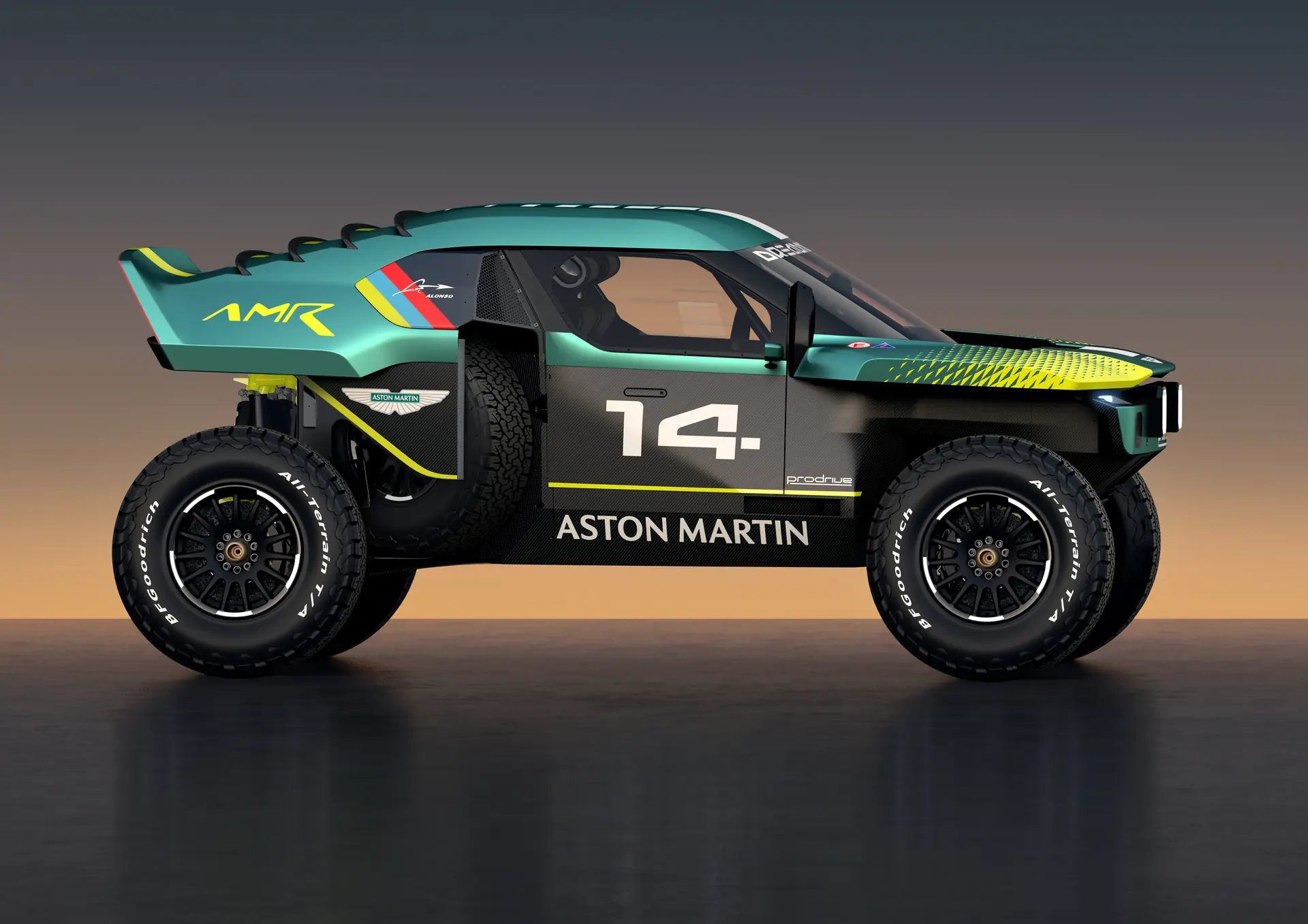
Full disclosure: The Torque Wrench hasn’t driven it — and neither has any journalist. The race is in January, the car has been driven in testing but has never turned a wheel in anger in competition, and Aston Martin has published no engine, no power figure, no weight, and no lap of anything. Aston Martin has released no exterior photographs of the real car yet — the exterior images are renders. What follows is the verified version of the loudest announcement in rally-raid this year: what Aston Martin said, what Prodrive built, where the car really came from, and the one question nobody at Gaydon will answer.
The news, straight: on November 17, 2026, Aston Martin Racing announced its first-ever factory entry at the Dakar Rally — three Prodrive-built Dreadnoughts for the 49th edition, January 9 to 23, 2027, from Portugal to Marrakech, a prologue and 12 stages, 4,341 kilometres against the clock. The drivers are the headline: Fernando Alonso, back at Dakar after seven years, alongside nine-time world rally champion Sébastien Loeb and reigning world rally-raid champion Lucas Moraes. Two of the greatest drivers alive, in a car that started life inside a video game.
And then the argument, which started before the press release finished loading: is the Dreadnought just a Dacia Sandrider with an Aston Martin badge? Prodrive built the Sandrider. Prodrive built this. The answer matters, because the Sandrider won Dakar in January 2026 — and if this car is that car in a new suit, Alonso and Loeb are not underdogs. They are favourites. This piece is the evidence, heard in full, with the doubt left exactly where it belongs.
R03Chapter 01
The Announcement: Three Cars, Two Legends, One Desert
Start with what Aston Martin actually said, because the release is unusually specific about everything except the car itself. Three Dreadnoughts, developed and built by Prodrive, which will run all three on the event. The 49th Dakar, January 9 to 23, 2027. A prologue of 129 kilometres at Loulé in the Algarve on January 9, an opening stage of 300 kilometres from the Algarve Stadium on January 10, then a ferry across the Mediterranean and eleven stages in Morocco, finishing in Marrakech on January 23. Twelve stages plus the prologue, 4,341 kilometres of special stages, 7,824 kilometres all in — the Dakar organiser ASO’s figure, which is the one to trust, because Aston Martin’s own November 17 release quotes a lower total, 6,805 km, that does not match it. Aston Martin’s hub now matches ASO at 7,824 km.
The route is the story’s first twist. Dakar left Saudi Arabia for one year only — an exceptional decision, ASO’s word — and returns to Africa for the first time since 2007, to Portugal and Morocco, before going back to Saudi Arabia for the 50th edition in 2028. There is a rest day on January 17 in Agadir and six bivouacs along the way. The longest day is Stage 11: 1,035 kilometres, 455 of them against the clock. That is the day this car either proves itself or breaks.
And the drivers. Alonso, 45 years old and still racing Formula 1 for Aston Martin, with Marc Coma alongside — the five-time Dakar motorcycle winner who was already his co-driver in 2020. Loeb, 52, with Fabian Lurquin — who won Dakar in January 2026 as Nasser Al-Attiyah’s co-driver in a Sandrider. And Moraes, 36, the reigning world rally-raid champion — he won the 2025 FIA World Rally-Raid Championship with Toyota, then moved to Dacia for 2026 — with Pablo Moreno. Three cars, three crews, one factory effort. Aston Martin has never done this before. It has hired the two most decorated drivers in the sport’s history to make sure the first time counts.
4,341 km
Of special stages at Dakar 2027 — Portugal to Marrakech, a prologue and twelve stages, one rest day, and the longest day 1,035 kilometres. The desert is the point, and the desert is back.
The video-game car. The two greatest drivers alive. The desert.
— The Torque Wrench
R04The Answer
Explainer
Aston Martin Dreadnought — November 17, 2026
An explainer, not a verdict
The Bottom Line
So what is the Dreadnought? A factory Dakar car, built by the team that won Dakar in January, wearing the bodywork of a video-game concept, driven by two of the greatest drivers alive and the reigning world champion. What it is not: a rebadge — no source supports that word, and the reporting supports ‘based on’, not ‘the same car’. What it is not, either: the game car. The V12, the armour, and the weapons storage stayed in the game.
What happens in January is the only verdict that matters, and it has not happened yet. If the Dreadnought is the Sandrider in a new suit, Alonso and Loeb start as favourites, and the story is whether two legends can finally close the one gap in their careers. If it is a new car that only shares a platform, the story is whether four months from video game to desert was enough. Either way, the desert will answer. It always does.
The Wrench’s rule has always been simple: if it doesn’t make you grin like an idiot, what’s the point? A video-game car, two legends, and 4,341 kilometres against the clock makes you grin like an idiot. January 9, Loulé. Be there — or, more realistically, watch it from the sofa like the rest of us, and enjoy every kilometre of it.
What we love
- The lineup. Alonso and Loeb in the same factory team, in the same desert, in January. That sentence alone is worth the price of the whole programme.
- The origin story is real and it is ridiculous in the best way: a drivable military SUV from Call of Duty, designed by Aston Martin’s own studio with Infinity Ward, turned into a factory rally car in four months.
- Prodrive. The team that built the Sandrider that won Dakar in January 2026 is building and running all three cars. This is not a branding exercise with a contractor. It is the winning team, wearing green.
- The route. Dakar is back in Africa — Portugal to Morocco, dunes and rock, a 1,035-kilometre stage, a rest day in Agadir. The desert is the point, and the desert is back.
- Moraes. Everyone will talk about Alonso and Loeb, and the reigning world champion in the third car is the man most likely to quietly win the whole thing.
What could be better
- No specs. Not one number — no engine, no power, no weight, no dimensions. Aston Martin announced a racing car and told us nothing about the racing car.
- The Dacia question is unanswered by anyone official. Aston Martin, Prodrive, and Dacia have all said nothing about what the Dreadnought shares with the Sandrider, which leaves the whole debate to inference and Autosport.
- Alonso’s priority is Formula 1 — his own words. Dakar is the side quest, and side quests do not get the preparation a factory Dakar assault deserves.
- No competitive mileage. The car has never raced. Its first competitive kilometres will be a 129-kilometre prologue in Portugal, in front of the world, with no shakedown race behind it.
- The game car’s V12 is a sound effect. The real engine is unpublished, and if it is the Sandrider’s Nissan V6, the Dreadnought will be fighting the same power cap as everyone else — no advantage, just a badge.
Technical specifications
- Entry
- Aston Martin Racing’s first factory Dakar entry — three Prodrive-built Dreadnoughts
- Dates
- January 9–23, 2027 (49th edition; dates subject to FIA approval)
- Route
- Loulé-Faro, Portugal → Marrakech, Morocco — prologue + 12 stages — Stage 1 in Portugal, Stages 2–12 in Morocco, rest day January 17 (Agadir)
- Distance
- 7,824 km total, 4,341 km of special stages (ASO)
- Drivers
- Alonso / Coma · Loeb / Lurquin · Moraes / Moreno
- Engine
- Not published — Jalopnik reports the Sandrider’s 3.0-litre twin-turbo Nissan V6; Aston Martin and Prodrive have confirmed nothing
- Class
- Unconfirmed — official entry list not yet published (entries close November 20, 2026)
- The game car
- Call of Duty: Modern Warfare 4 + Warzone — revealed July 16, 2026, in-game from October 23, 2026; V12, armour and weapons storage do NOT carry over
R05Chapter 02
The Video-Game Car
Now the part that sounds made up, and is not. The Dreadnought began life as a drivable military SUV in Call of Duty: Modern Warfare 4 and Warzone — a bespoke tactical concept designed by Aston Martin’s own design team, led by chief creative officer Marek Reichman, engineered from the ground up with Infinity Ward, Activision’s studio. It was unveiled on July 16, 2026, went into the game on October 23, and had military-grade armour plating, supercar-level performance, and — because it is a video game — the roar of a full-blooded V12. A full-size physical version was even shown at Fanatics Fest in New York before the game launched.
Here is the part that matters: the Dakar car is not the game car with number plates. Aston Martin says only that the concept’s inspiration was ‘forged into reality’ as a purpose-built rally raider — and Jalopnik, which read the announcement properly, notes the Dakar version will not have the game car’s carbon-fibre chassis, military armour, or weapons storage. The V12 is a game sound. The real car’s engine has not been published at all — no capacity, no power, no configuration, nothing. What carried over from the game is the look: the square headlights, the louvred rear window, the slab-sided military stance. The car you can drive in Warzone and the car Alonso will drive in Morocco share a silhouette and a name. Everything underneath is a race car.
Say what you like about the gimmick — and plenty will — but the gimmick is the point. Aston Martin did not quietly enter a rally. It turned a video-game concept into a factory motorsport programme in four months, from the July reveal to the November announcement, and put its two biggest names in it. The Dreadnought is a marketing masterstroke that happens to be a real racing car. Whether it is a fast racing car is a question for January.
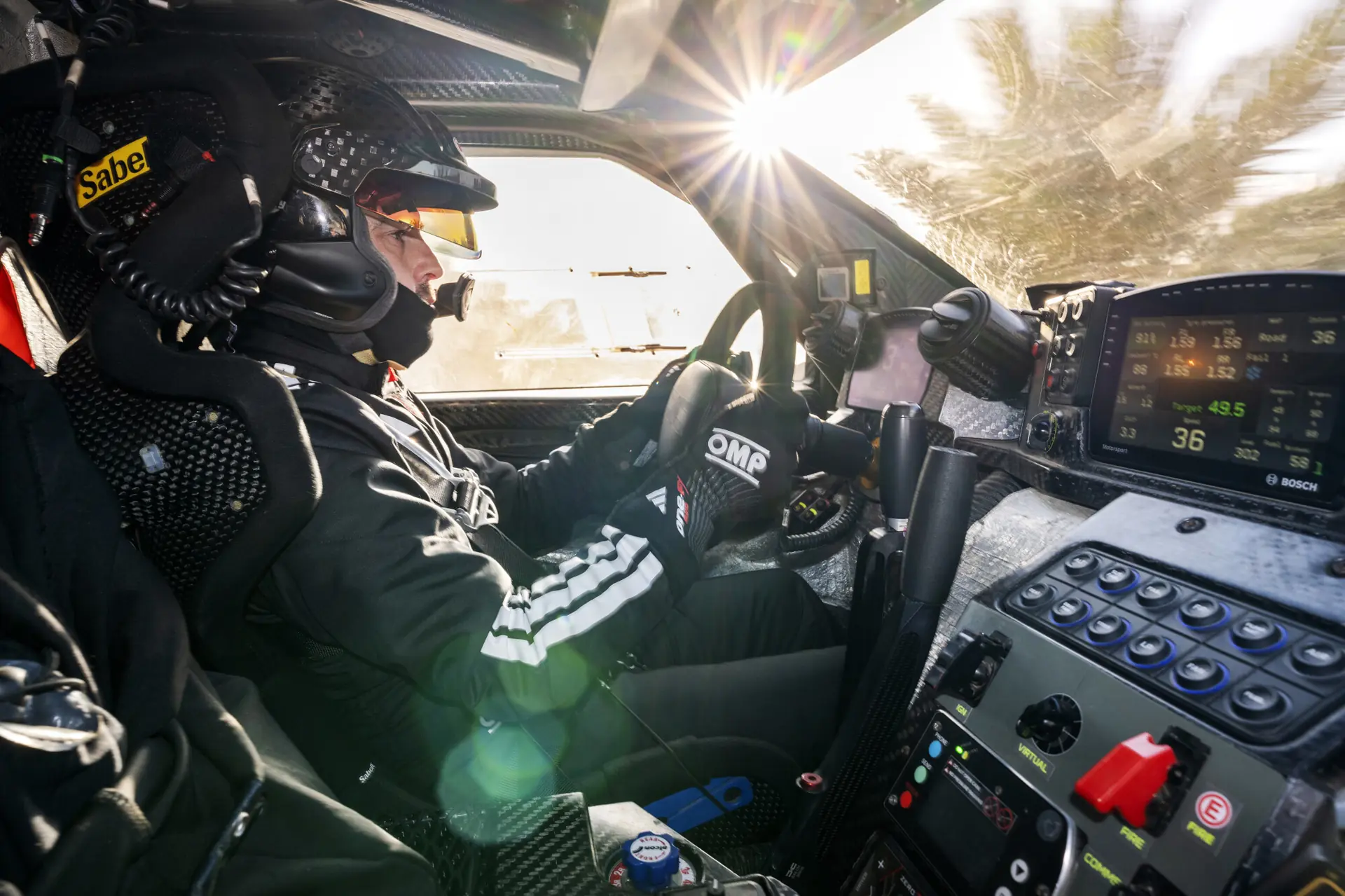
“The video-game car. The two greatest drivers alive. The desert.”
R06Chapter 03
The Drivers: Unfinished Business and the Last Shot
Alonso’s Dakar story is seven years old and one paragraph short. He entered once, in 2020, in a Toyota Hilux with Marc Coma beside him, and finished 13th. The number lies. He was second on Stage 8, fourth on Stages 3 and 12, inside the top seven on roughly half the stages — then lost more than two hours on Stage 2 with suspension damage, rolled on Stage 10, and still came home the top-placed rookie. Aston Martin calls Dakar his ‘unfinished business’, and for once the press-release poetry is accurate: he was quick enough to win stages and unlucky enough to finish 13th. He is back with the same co-driver, in a factory car, at 45 years old. Formula 1 remains his priority — his own words, via the announcement — but this is the race he has spent seven years thinking about.
Loeb’s story is the opposite shape: everything except the win. Twenty-eight Dakar stage wins. Five podiums, three times the runner-up, seven finishes from ten attempts, and no overall victory. He has been the fastest man in the desert and still gone home without the trophy. At 52, with Fabian Lurquin — the co-driver who won it in January in the Sandrider, alongside Nasser Al-Attiyah — beside him, and the same Prodrive family of cars underneath him, this is the closest he has ever been to the one trophy his career does not have. If there is a last shot, this is it.
And then Moraes, who is easy to overlook between two giants and would be a mistake to overlook. The reigning FIA World Rally-Raid champion, 36 years old, third on his Dakar debut in 2023 — he won the 2025 title with Toyota, then moved to Dacia for 2026, so like Loeb he comes from Prodrive’s Dacia Sandrider squad. He is not here as the third car. He is here because he is the champion, and champions do not like being called the third car. If Alonso is the story and Loeb is the fairytale, Moraes is the man who might actually win it.
R07Chapter 04
The Dacia Question
Now the argument, and it needs care, because the loudest version of it is not supported by the evidence. The claim going around is that the Dreadnought is a rebadged Dacia Sandrider. Here is what is actually on the record. Prodrive built the Sandrider — the car that won Dakar in January 2026 with Nasser Al-Attiyah. Prodrive built the Dreadnought. Autosport reported in October that Alonso would drive an Aston Martin-branded car prepared by Prodrive and ‘based on the Dacia Sandrider’, and reported again on announcement day that the Dreadnought is ‘understood to be the latest iteration of the prototype that previously competed as the Dacia Sandrider’. Jalopnik, same day, says it is ‘based on the Prodrive-designed Dacia Sandrider’ and fitted with the same 3.0-litre twin-turbocharged Nissan engine.
And here is what is not on the record: anything from Aston Martin, Prodrive, or Dacia saying so. Neither the Aston Martin release nor the Prodrive release mentions Dacia or the Sandrider at all. No source uses the word ‘rebadged’. The shared hardware — the Prodrive T1+ architecture and, per Jalopnik, the Nissan V6 — is reported by reputable outlets, not confirmed by the manufacturers. What is different is visible: the bodywork is new, styled on the Call of Duty concept, square headlights and louvred rear window, and the game car’s carbon chassis, armour, and weapons storage are gone. The honest sentence is this: the Dreadnought is reported to be the latest iteration of Prodrive’s Dakar-winning Sandrider platform, wearing new Aston Martin bodywork. ‘Rebadged’ overstates the evidence. ‘Based on’ is what the reporting supports.
Why the silence, then? Because the Sandrider programme is over. Dacia confirmed in February 2026 that it would end after the 2026 season — a three-year plan to win Dakar, achieved in two, with Al-Attiyah’s victory in January. That freed Prodrive’s platform, and Prodrive spent the summer talking to multiple manufacturers about taking it over before agreeing with Aston Martin. The Dacia question is not a scandal. It is how rally-raid works: a winning platform finds a new badge. Loeb and Moraes both arrive from that same Dacia Sandrider squad — Loeb drove the Sandrider for Dacia, Moraes joined Dacia for 2026 after winning the 2025 title with Toyota. The question January will answer is not whether the car is a Sandrider. It is whether the Sandrider’s speed survives the new bodywork, the new team, and the two most famous drivers in the sport driving it like they have something to prove. Because they do.